Thimphu is one of the world's most unusual capitals. It is a city of around 115,000 people where traditional architecture is the rule, where national dress is worn to the office, and where the main junction is famously directed by a police officer in white gloves rather than traffic lights. It is also where you see Bhutan as it is today: young, changing, and proud of what it has kept.
A capital like no other
Thimphu became the capital of Bhutan in the 1950s and 1960s, and it has grown quickly since, along the Wang Chhu river. Yet every building, from ministries to petrol stations, follows traditional design rules, with painted window frames and sloping roofs. There are no traffic lights in the city centre; at the busiest crossing on Norzin Lam a police officer directs the traffic by hand from an ornate pavilion.
It is a relaxed, walkable city. Most visitors stay one or two nights, but it rewards a slower look.
Buddha Dordenma
High on a ridge at the southern end of the valley, the great bronze Buddha Dordenma looks down over the city. More than 50 metres tall and gilded in gold, it is one of the largest seated Buddha statues in the world, and it was completed in 2015. Inside the statue and its throne, the city's official guide records more than 125,000 smaller Buddha statues.
Come at sunset, when the statue glows in the evening light and the city lights come on below. The site is also known as Kuensel Phodrang, and walking trails lead from it into the surrounding nature park.
The National Memorial Chorten
The white Memorial Chorten, with its golden spire, was built in 1974 in memory of the Third King, Jigme Dorji Wangchuck, often called the father of modern Bhutan. It is not a museum but a living place of devotion. From dawn until late evening, Thimphu residents, many of them elderly, walk around it clockwise, turning the large prayer wheels and counting prayers on their beads.
Join them for a few circuits in the early morning or evening. It is the best way to understand how closely faith is woven into everyday life in Bhutan.
Tashichho Dzong
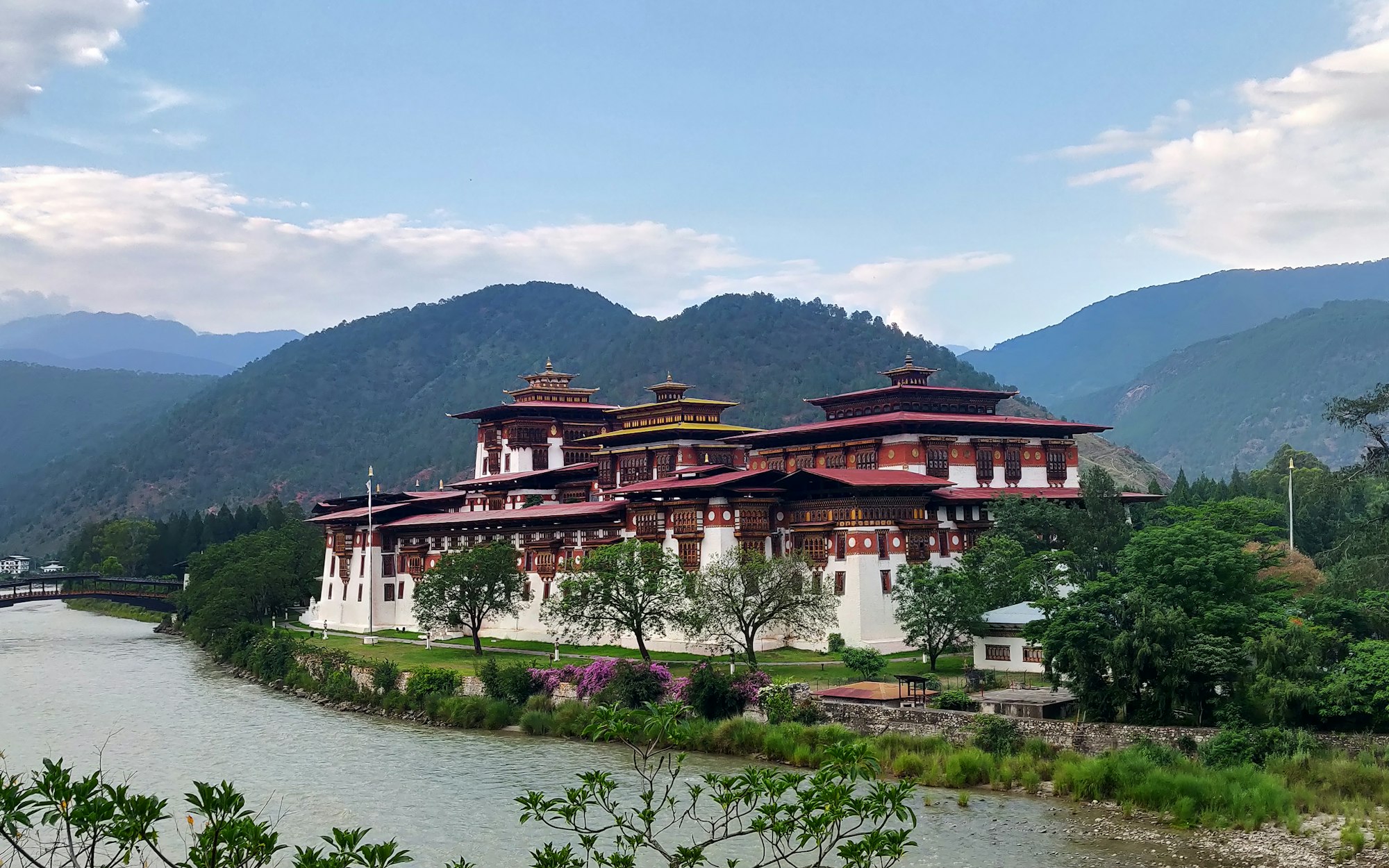
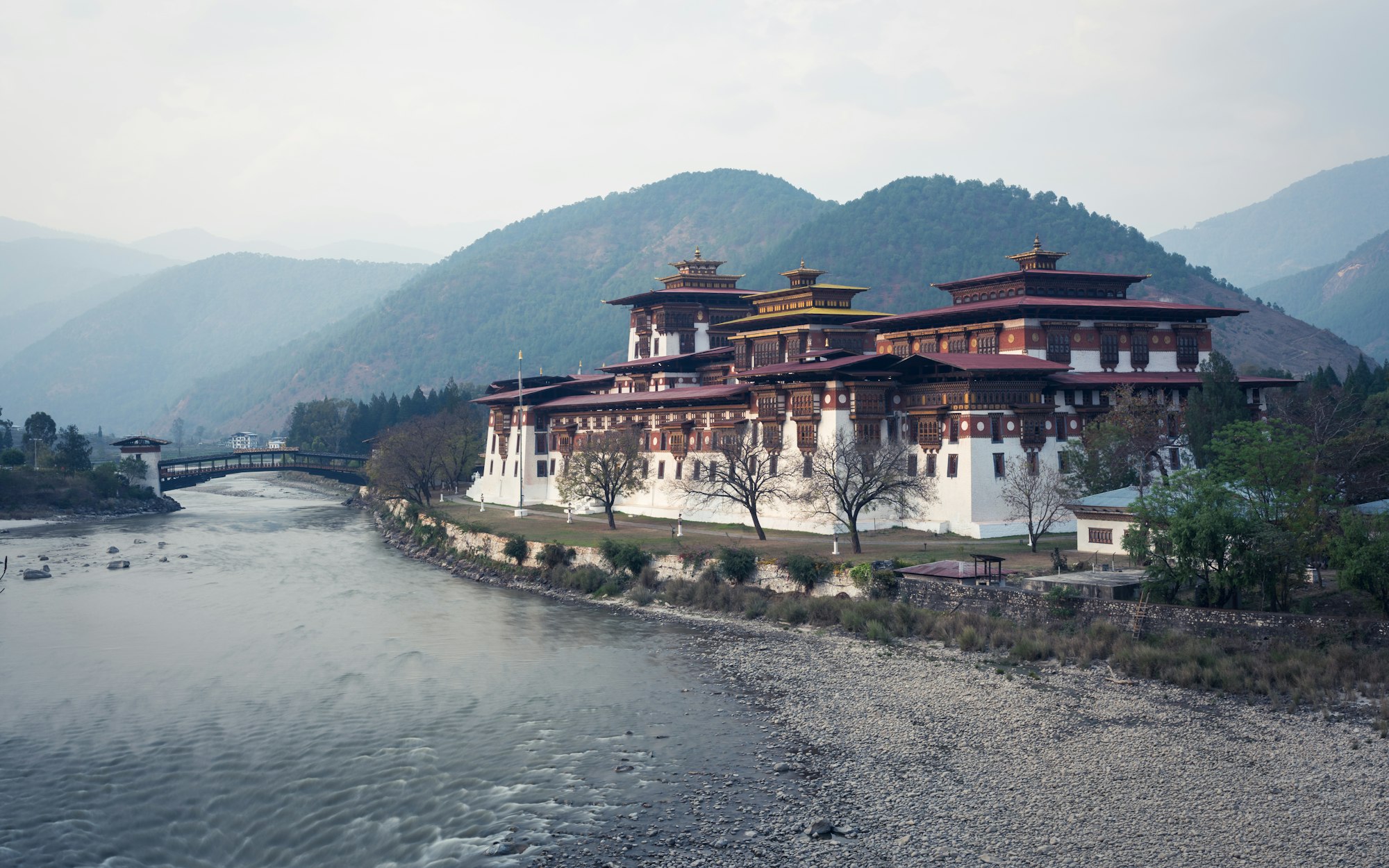
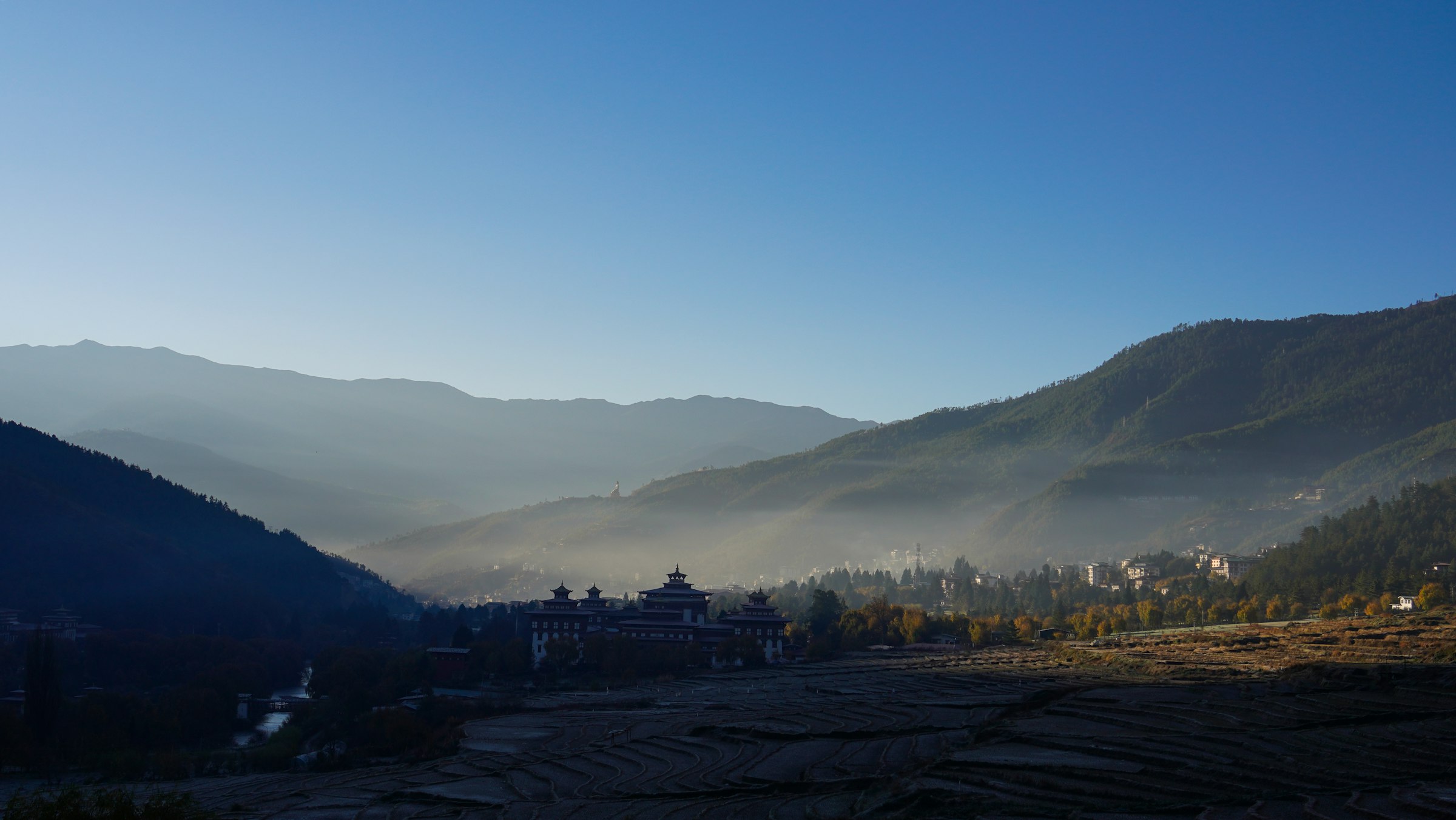
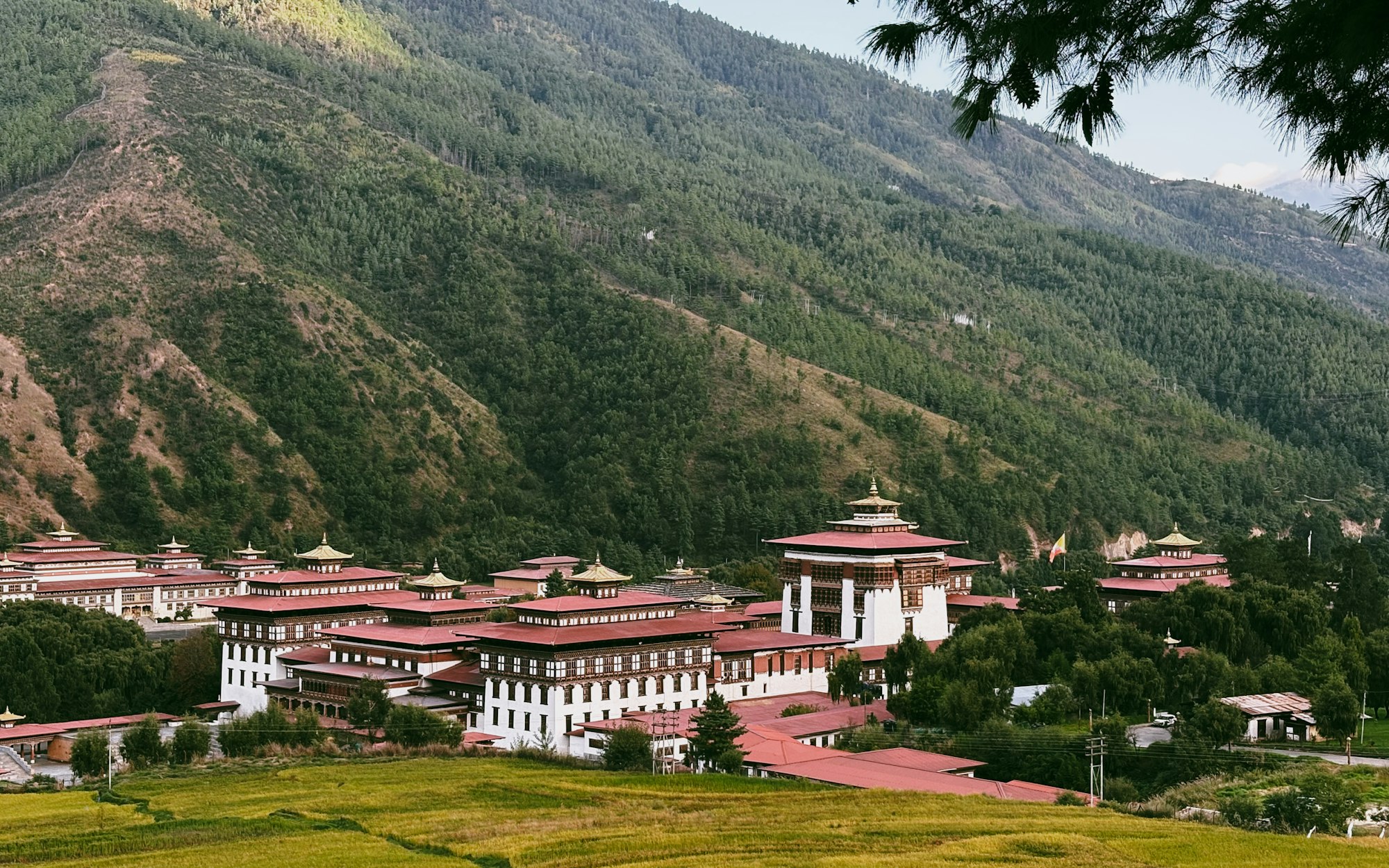
On the western bank of the river stands Tashichho Dzong, the seat of the Government of Bhutan and the office of the King, and the summer home of the central monastic body. Much of the present building was rebuilt in traditional style in the 1960s. Visitors can see the courtyard and main temple outside office hours, and the dzong is beautifully lit after dark. In autumn it hosts the Thimphu Tshechu, the capital's biggest festival.
Crafts and museums
Bhutan recognises thirteen traditional arts, the zorig chusum, from painting and sculpture to woodcarving, embroidery and weaving. At the National Institute for Zorig Chusum you can watch students learning them, usually during term time on weekdays.
The Royal Textile Academy tells the story of Bhutan's extraordinary weaving traditions and shows the finest textiles in the country. The Folk Heritage Museum, set in a restored three-storey farmhouse, shows how rural families lived, from the kitchen and the grain store to the altar room. Nearby, the National Library holds Buddhist texts and one of the largest published books in the world.
Temples and viewpoints
- Changangkha Lhakhang: a twelfth-century temple on a ridge above the city, where parents bring newborn children to receive their names and blessings.
- Simtokha Dzong: just south of the city, built in 1629 and often described as the oldest dzong in Bhutan in its original form.
- The Motithang Takin Preserve: home to the takin, Bhutan's national animal, a curious creature that looks like a cross between a goat and a cow.
- Sangaygang viewpoint: by the telecommunications tower above the city, hung with prayer flags, with the best view over the whole valley.
- Cheri and Tango monasteries: half-day hikes north of the city to two important monasteries in forest settings.
Markets and shopping
The Centenary Farmers' Market by the river is busiest from Friday to Sunday, when farmers from across the region bring vegetables, red rice, dried fish, chillies, datshi cheese and incense. Across the cantilever footbridge, a covered handicrafts market sells masks, prayer flags, jewellery and textiles.
For quality handmade textiles and crafts, ask your guide about the government-supported craft outlets and smaller workshops in the city centre, where you can buy directly from the makers.
Thimphu in the evening
Thimphu's small centre has cafés, bakeries, restaurants serving Bhutanese, Indian and international food, and a handful of bars where you may hear local bands. Weekends are livelier; Tuesday is traditionally a 'dry day' in Bhutan, when bars do not serve alcohol. Walking around the lit Tashichho Dzong or the Memorial Chorten after dark is a peaceful alternative.
Day trips from Thimphu
Thimphu is a good base for short excursions. Tango and Cheri monasteries are easy half-day hikes; the Dochula pass is a 45-minute drive on the way to Punakha; and the Phajoding monastery high above the city is a full-day walk with wide views. Thimphu is also the end point of the Druk Path trek.
A one-day plan for Thimphu
- Early morning: join residents walking around the Memorial Chorten.
- Mid-morning: the National Institute for Zorig Chusum or the Royal Textile Academy.
- Lunch: a Bhutanese lunch in the town centre.
- Afternoon: Changangkha Lhakhang, the takin preserve and the Sangaygang viewpoint.
- Late afternoon: Tashichho Dzong when its courtyard opens to visitors after office hours.
- Sunset: Buddha Dordenma, as the lights come on across the valley.
The Thimphu Tshechu
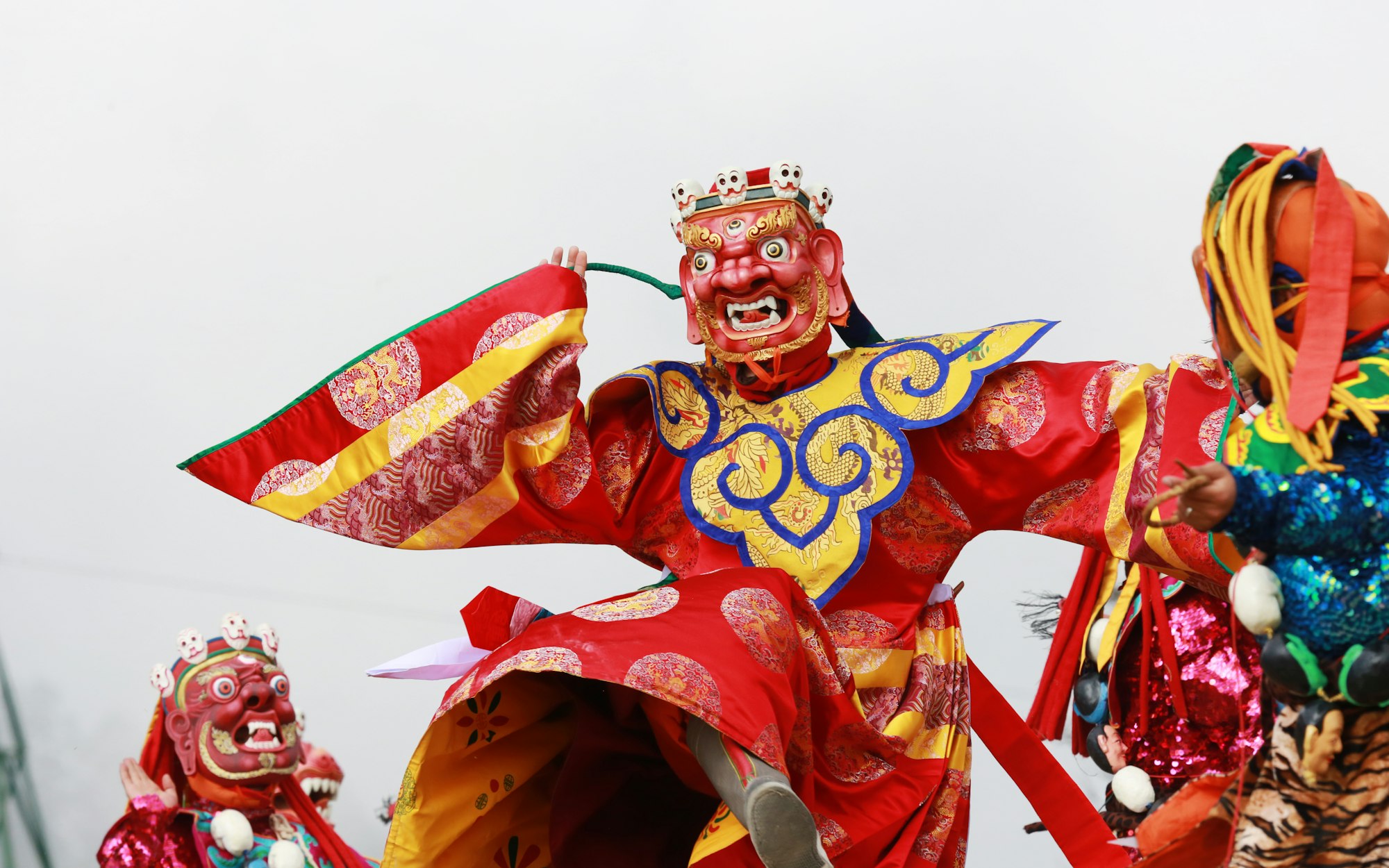
The Thimphu Tshechu, held in the courtyard of Tashichho Dzong, is the largest festival in the country, usually falling in September or October. For several days the capital fills with families from across the region, dressed in their best clothes, to watch the masked dances and receive blessings. It is a wonderful time to visit, but hotels are busy and the courtyard is crowded, so we plan seating and timings carefully for our guests.
Getting around
Your guide and driver take you between sights in a private vehicle, but central Thimphu is best seen on foot. Norzin Lam, the main street, runs the length of the town centre, with cafés, craft shops and the famous traffic pavilion. Pavements can be uneven and there are hills, so comfortable shoes help. Taxis are easy to find for short trips in the evening.
Where to stay
Thimphu has the widest choice of hotels in Bhutan, from simple family-run guesthouses in the town centre to international luxury hotels on the edges of the valley. Staying centrally makes evening walks easy; staying on the hillsides is quieter and offers views. We choose hotels to suit each journey and can advise on the trade-offs.
How long to stay
One full day covers Buddha Dordenma, the Memorial Chorten, Tashichho Dzong and a craft museum. Two days let you add the markets, Changangkha Lhakhang, the takin preserve and a hike to Tango or Cheri. If you are here for the Thimphu Tshechu in autumn, plan on three nights.
Frequently asked questions
Is Thimphu worth visiting?
Yes. Thimphu is the best place to see modern Bhutan alongside its traditions, with the Buddha Dordenma, the Memorial Chorten, Tashichho Dzong, craft schools and markets all within a short distance.
How far is Thimphu from Paro airport?
Thimphu is about an hour's drive from Paro International Airport, along the Paro and Wang Chhu rivers.
Does Thimphu really have no traffic lights?
Yes. There are no traffic lights in central Thimphu; the busiest junction on Norzin Lam is directed by a traffic police officer by hand.
How many days should I spend in Thimphu?
One full day covers the main sights. Two or three days allow time for crafts, markets, a monastery hike or the Thimphu Tshechu festival.

Written by
The Bhutan Travel Nexus team, Bhutan-based travel designers who plan private journeys across the kingdom. Facts were checked in ; fees and rules can change, so we confirm them when you book.