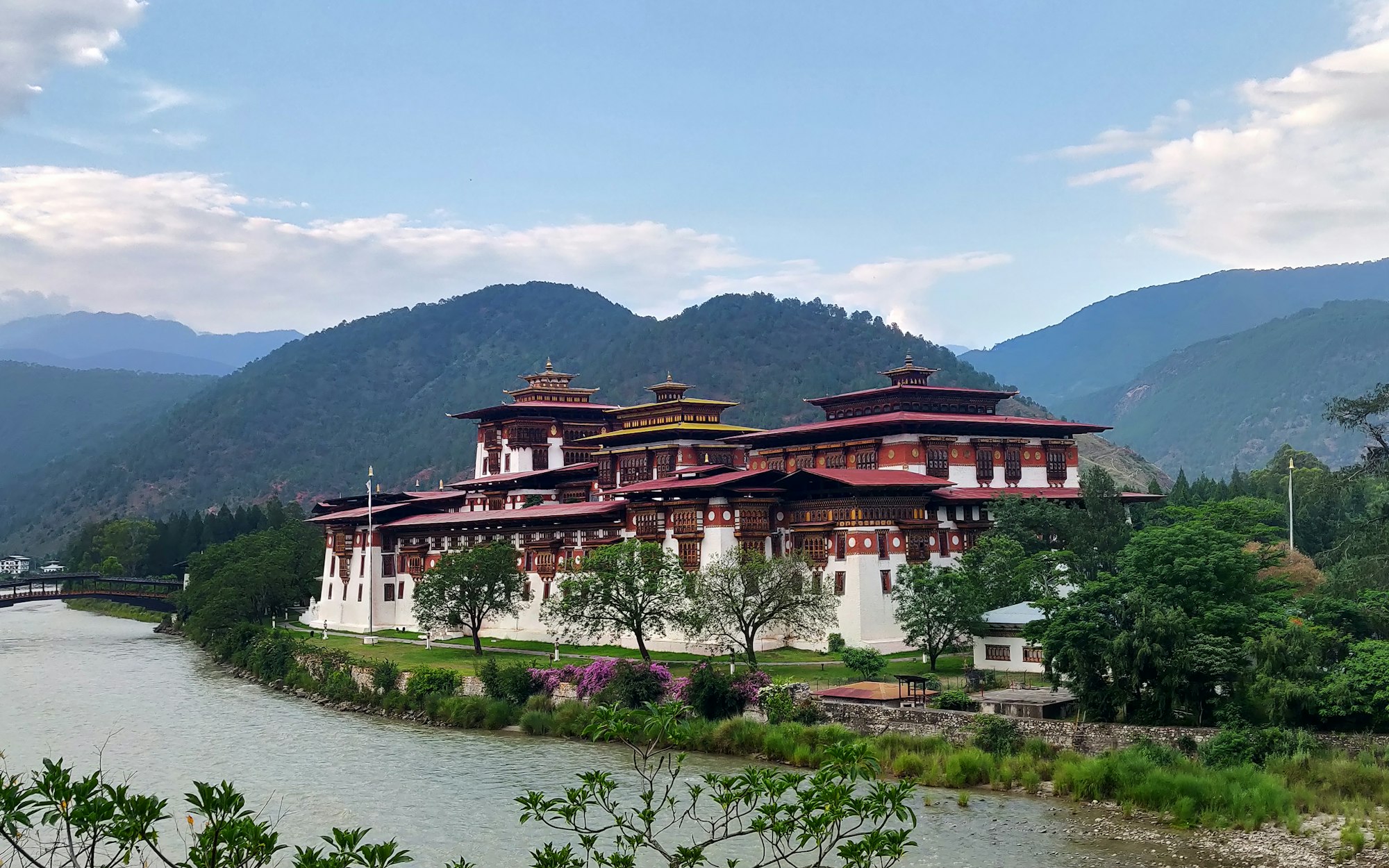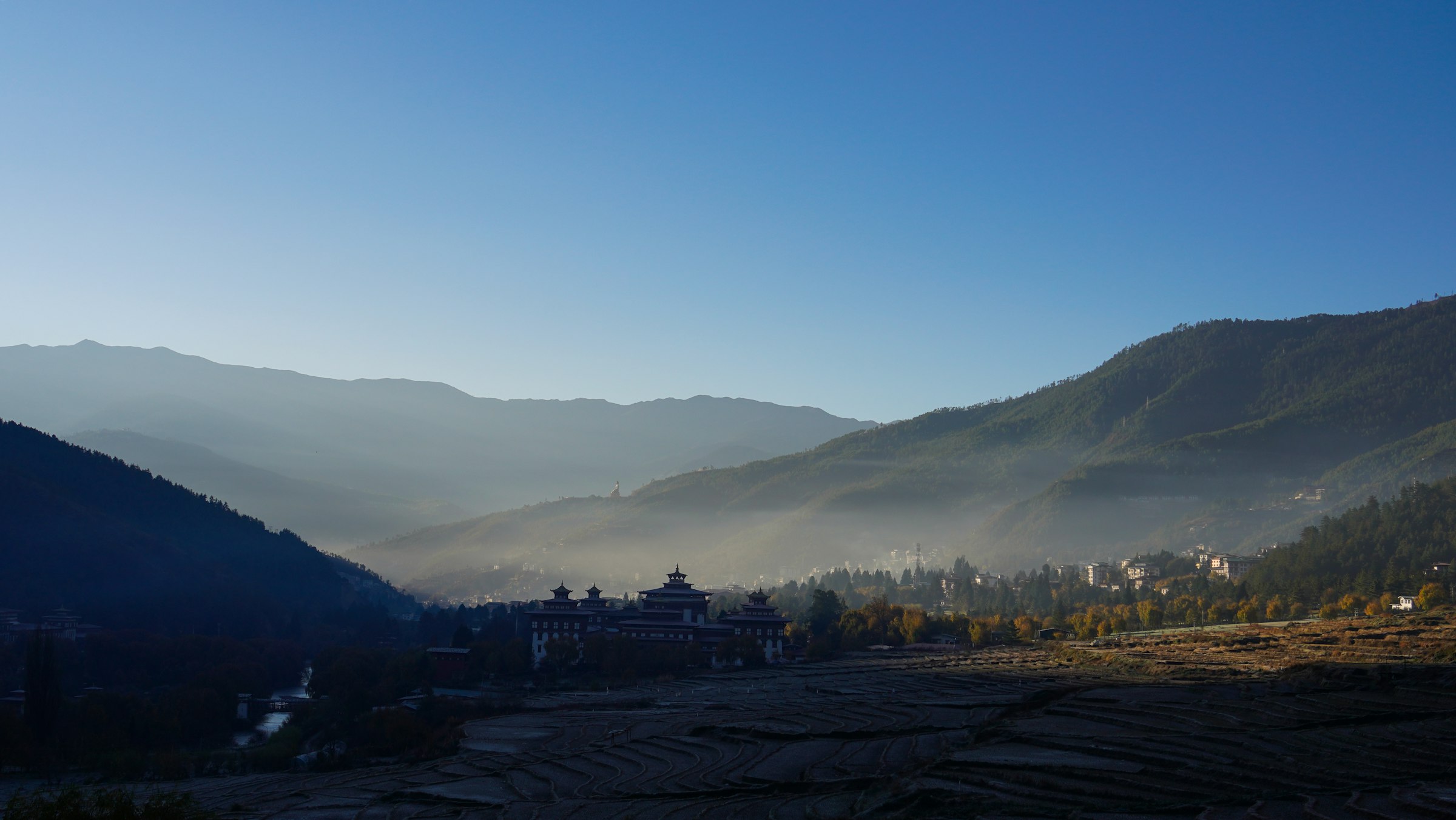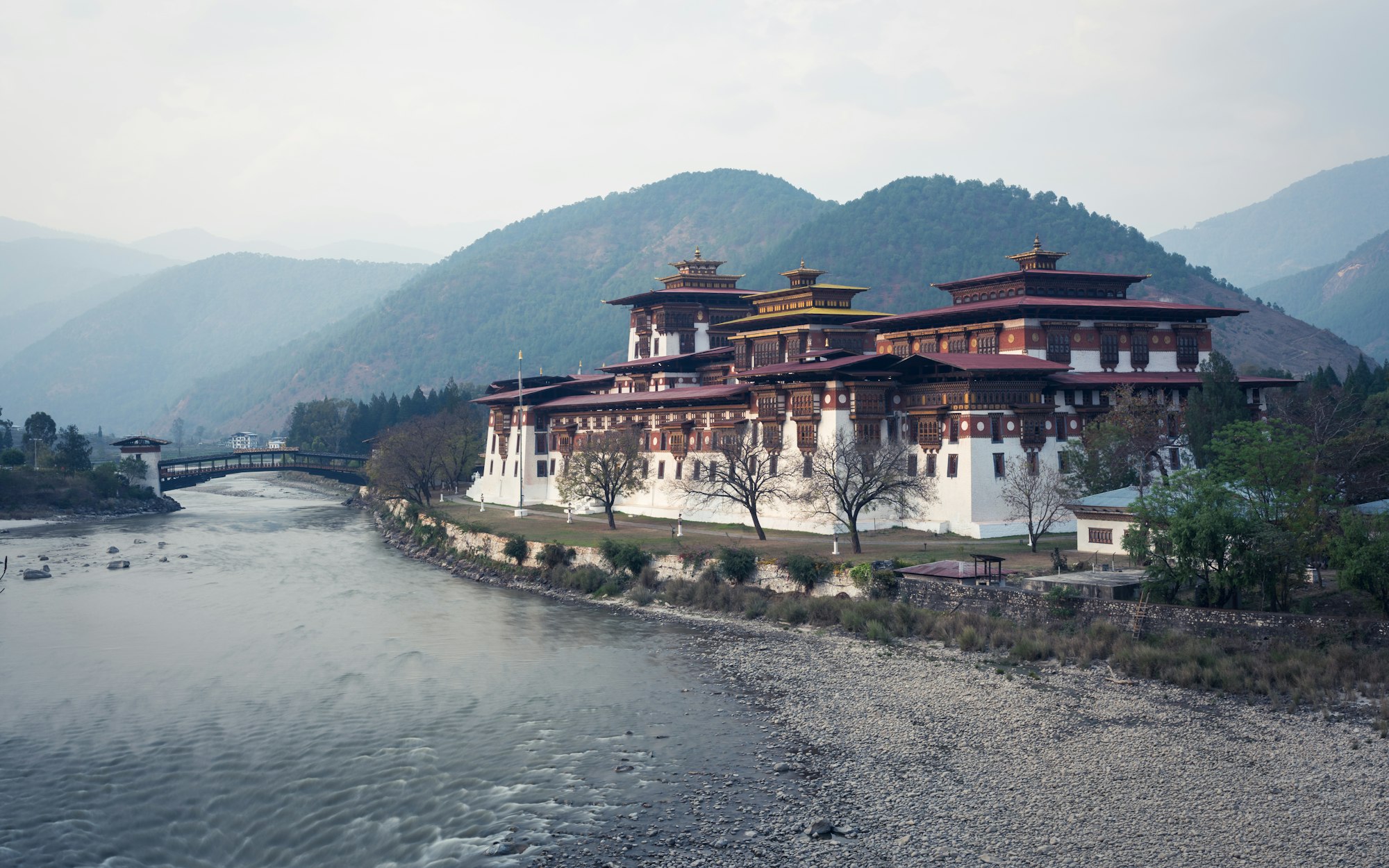
No building says Bhutan more clearly than a dzong. These great white fortresses, with their sloping walls, red bands and golden roofs, guard almost every major valley in the country. They were built as strongholds in the seventeenth century, and they still do the work they were made for: half monastery, half seat of government, and the setting for the country's greatest festivals.
What a dzong is
The word dzong is usually translated as fortress, but a dzong is more than a castle. Inside its walls are two worlds side by side. One half belongs to the district administration, with the offices of the dzongkhag, the district. The other half belongs to the monastic body, with temples, assembly halls and the quarters of the monks. Between them rises the utse, the central tower, which holds the most important shrines.
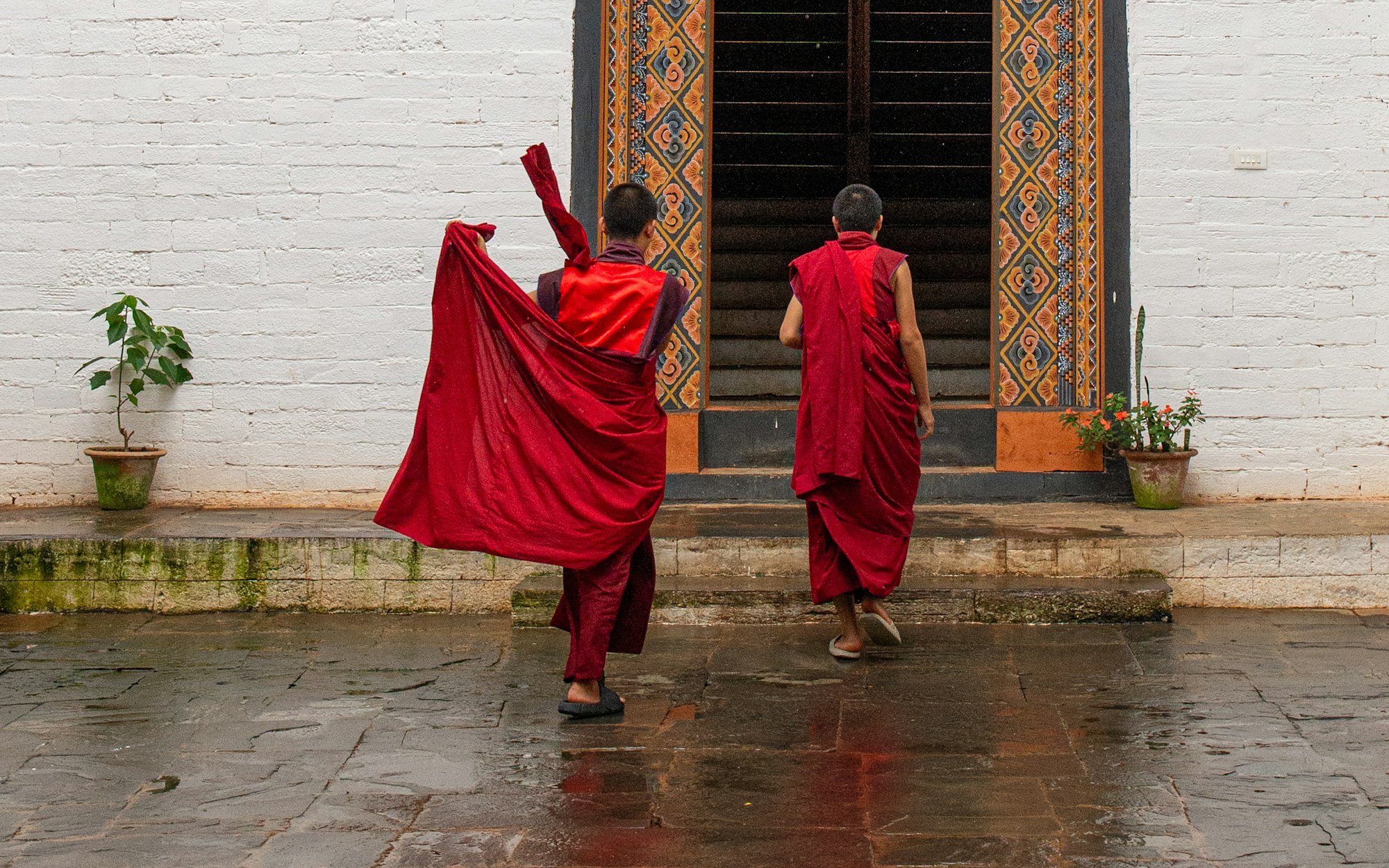
This joining of religious and civil authority reflects the system on which Bhutan was founded, and it is why dzongs are still busy places today. Officials in national dress walk past monks in maroon robes, and families come in to make offerings or attend a ceremony.
Who built them
Most of Bhutan's great dzongs date from the first half of the seventeenth century, when the Tibetan lama Zhabdrung Ngawang Namgyal unified the valleys of western Bhutan into one state. He built a chain of dzongs to defend each valley and to govern it, beginning with Simtokha Dzong near Thimphu in 1629, often described as the oldest dzong to survive in its original form.
Dzongs were traditionally built without written plans and, famously, without nails: timber frames are joined with pegs and slotted into thick walls of rammed earth and stone. Master builders worked from the design in their heads, guided by a lama, and the same skills are still used to repair and rebuild dzongs today.
How to read a dzong when you visit
- The walls slope inwards as they rise, which makes the building look even taller and more solid.
- The broad red band near the top of the wall, the kemar, marks a building of religious importance.
- Courtyards, called dochey, separate the administrative and monastic halves.
- The utse, the central tower, holds the main temples and is the spiritual heart of the dzong.
- Windows are small on the lower floors and larger and more ornate higher up, a legacy of the dzong's defensive role.
- Every painted detail, from the dragons on the beams to the wheel of life near the entrance, has a meaning your guide can explain.
Punakha Dzong
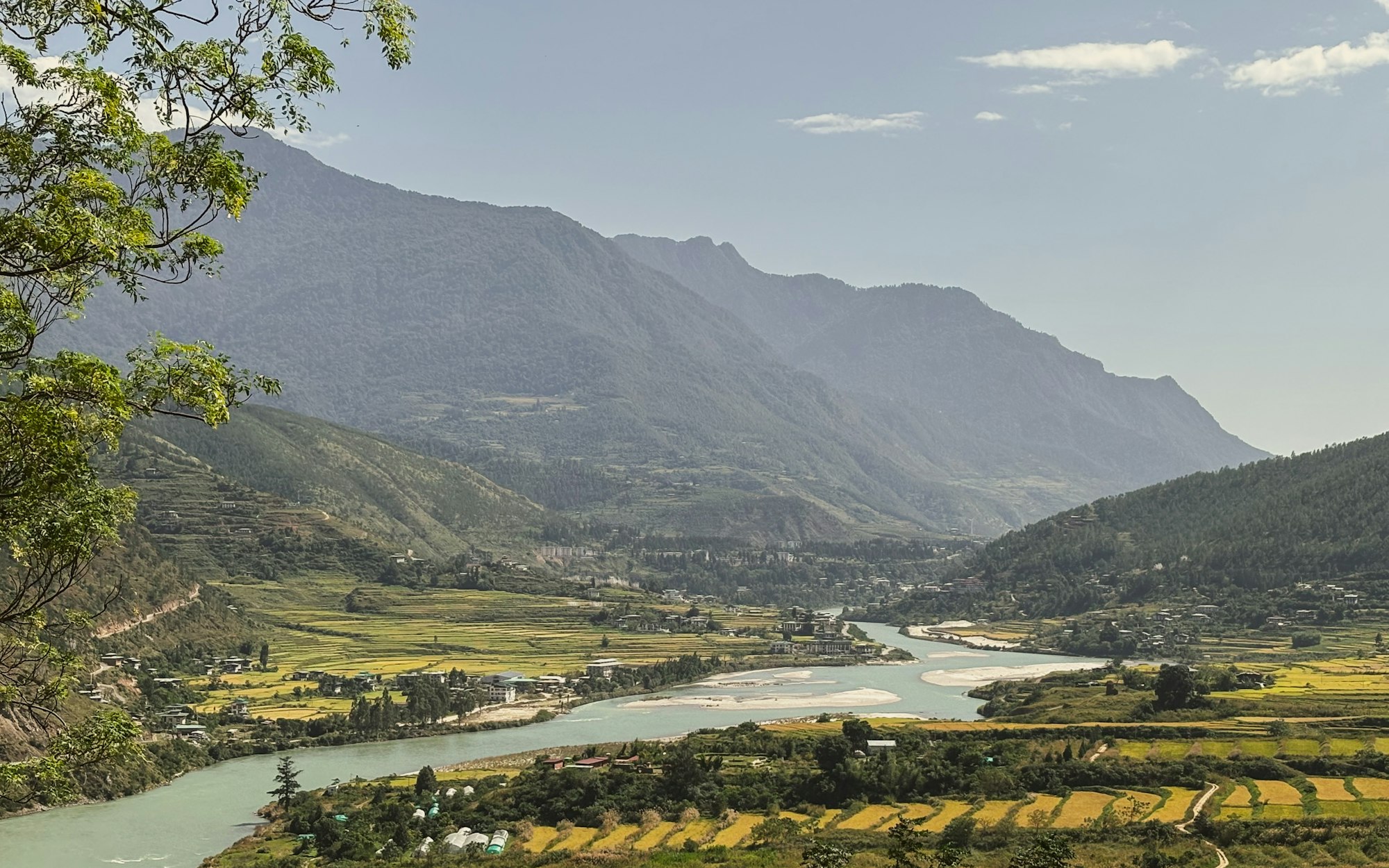
Built in 1637–38 at the meeting of the Pho Chhu and Mo Chhu, the 'father' and 'mother' rivers, Punakha Dzong is the dzong most people fall in love with. It was the seat of government until the capital moved to Thimphu in the 1950s, it is the winter home of the central monastic body, and it holds some of the most sacred relics in the country. Each of Bhutan's kings receives the sacred five-coloured scarf here before his coronation, and in 2011 the dzong hosted the wedding of the Fifth King.
Come in spring, when the jacaranda trees along the river are in flower, and cross the wooden cantilever bridge to enter. The Punakha Drubchen and Tshechu festivals are held here in late winter or early spring.
Rinpung Dzong, Paro
Rinpung Dzong, 'the fortress on a heap of jewels', stands above the Paro river and was completed in the 1640s. Most visitors walk down to it across the covered wooden bridge, Nyamai Zam, and on to the Paro town side. Above it on the hillside is the round Ta Dzong, its old watchtower, which now houses the National Museum.
Every spring the courtyard of Rinpung Dzong hosts the Paro Tshechu, one of Bhutan's best-known festivals, and before dawn on its last day a giant thangka, the thongdrel, is unrolled over the festival ground beside the dzong.
Trongsa Dzong
Trongsa Dzong is the largest in Bhutan and one of the most dramatic, spilling down a ridge above a deep gorge in the centre of the country. Its position on the only route between east and west made whoever held it powerful, and the first two kings of Bhutan served as Penlop, or governor, of Trongsa before they took the throne. The crown prince still traditionally holds the title.
The best first view is from the road as you approach from the west, where the whole dzong appears across the valley. Above it, the old watchtower, Ta Dzong, has been turned into a museum of the monarchy.
Tashichho Dzong, Thimphu
Tashichho Dzong is the seat of Bhutan's government, housing the throne room and offices of the King as well as ministries, and it is the summer home of the central monastic body. Much of what you see today was rebuilt in traditional style in the 1960s, when Thimphu became the capital. Visiting hours for the courtyard are limited during the working day, and your guide will plan around them; the dzong is especially beautiful when lit up after dark.
Jakar Dzong and the dzongs of the centre
Jakar Dzong, 'the fortress of the white bird', sits on a ridge above the town of Jakar in Bumthang. The present building dates from 1667, and its tall central tower is one of the most distinctive in the country. Near Punakha, Wangdue Phodrang Dzong, destroyed by fire in 2012, has been rebuilt using traditional methods and was reconsecrated in 2022.
Drukgyel, Wangdue and Gasa: three more worth knowing
Drukgyel Dzong, at the head of the Paro valley, was built in the seventeenth century to celebrate a victory over Tibetan invaders. It was ruined by fire in 1951 and stood as a romantic shell for decades before being rebuilt in recent years. On a clear day, Jomolhari, one of Bhutan's highest peaks, rises behind it.
Wangdue Phodrang Dzong, on a ridge between Punakha and central Bhutan, was one of the most important in the country before it burned in 2012; its careful reconstruction, completed in 2022, shows that the craft of dzong building is very much alive. Far to the north, Gasa Dzong guards the route to the high villages of Laya and Lunana, and is often visited by trekkers.
Festivals inside the dzongs
Many of Bhutan's tshechus are held in dzong courtyards, and seeing one transforms the building. The open flagstones fill with families in their finest clothes, monks perform masked dances to the sound of horns and cymbals, and atsaras, masked clowns, tease the crowd. The festivals of Paro, Thimphu, Punakha, Trongsa and Jakar all take place in or beside their dzongs, at different times of the year.
Photographing dzongs
- The best views are often from outside: Punakha from the riverbank, Trongsa from the road to the west, Paro from the Ta Dzong path above.
- Morning light is softer and the courtyards are quieter before groups arrive.
- Ask before photographing monks or officials, and never photograph inside temples.
- Drones need special permission in Bhutan and are not allowed near dzongs without it.
Visiting etiquette
- Wear long sleeves and long trousers or a long skirt; no shorts, sleeveless tops or hats inside.
- Bhutanese visitors wear a ceremonial scarf, the kabney or rachu; as a visitor you are not expected to.
- Walk clockwise around temples, chortens and prayer wheels.
- Photography is allowed in most courtyards but not inside temples; your guide will tell you where.
- Speak quietly and do not point your feet towards altars when sitting.
- Opening hours vary and are shorter on weekends and holidays, so your guide will arrange the timing.
Seeing dzongs on a journey
Almost every journey in Bhutan passes several dzongs. A week in the west usually includes Paro, Thimphu and Punakha; a journey into central Bhutan adds Trongsa and Jakar. If you can, plan to see at least one tshechu in a dzong courtyard, when the whole valley comes together inside its walls.
Frequently asked questions
What is a dzong in Bhutan?
A dzong is a fortress that houses both the district government and a monastic community. Most were built in the 17th century and are still in use today.
Can tourists go inside dzongs?
Yes. Visitors can enter the courtyards and some temples, usually with a licensed guide, during visiting hours. Modest dress with long sleeves and long trousers or skirts is required.
Which is the most beautiful dzong in Bhutan?
Punakha Dzong, built in 1637–38 where two rivers meet, is widely considered the most beautiful. Trongsa Dzong is the largest.
Which is the oldest dzong in Bhutan?
Simtokha Dzong near Thimphu, built in 1629 by Zhabdrung Ngawang Namgyal, is often described as the oldest dzong surviving in its original form.

Written by
The Bhutan Travel Nexus team, Bhutan-based travel designers who plan private journeys across the kingdom. Facts were checked in ; fees and rules can change, so we confirm them when you book.