Most first-time visitors spend between five and ten nights in Bhutan. That is enough to see the western valleys properly without rushing, and it is the question we are asked most often. The honest answer depends on three things: how far east you want to travel, whether a festival or trek is part of the plan, and how much time you want to spend simply being there.
Why the answer is different in Bhutan
In most countries the length of a trip is limited by flights and budget. In Bhutan, two more things shape it. The first is geography: the country is only about 300 kilometres from west to east, but the road climbs over passes of more than 3,000 metres and winds through deep valleys, so a journey that looks short on a map can take most of a day. The second is the Sustainable Development Fee, a nightly fee paid by every visitor, which means each extra night has a real cost.
Almost every journey begins and ends at Paro, where the international airport is. That means the first and last days are partly travel days, and that a route into central or eastern Bhutan has to come back again, either by road or on a domestic flight. Planning around those two facts is the key to a trip that feels full but not hurried.
Five days: the essentials of western Bhutan
Five days (four nights) is the shortest trip we would recommend, and it works well for travellers combining Bhutan with India, Nepal or Thailand. It covers the four places most people picture when they think of Bhutan.
- Day 1: Arrive in Paro and drive to Thimphu, about an hour away, stopping at the iron-chain bridge of Tamchog Lhakhang.
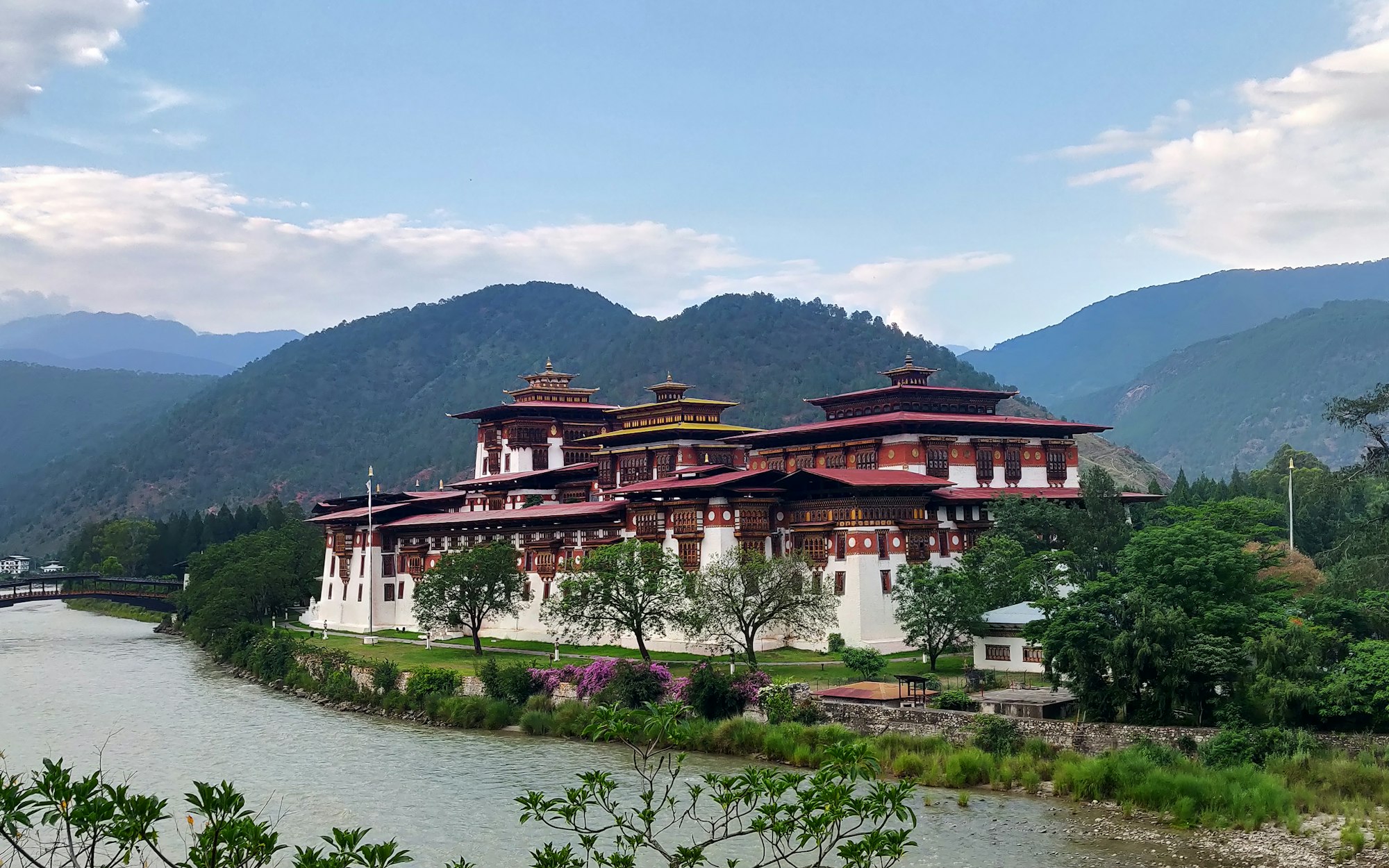
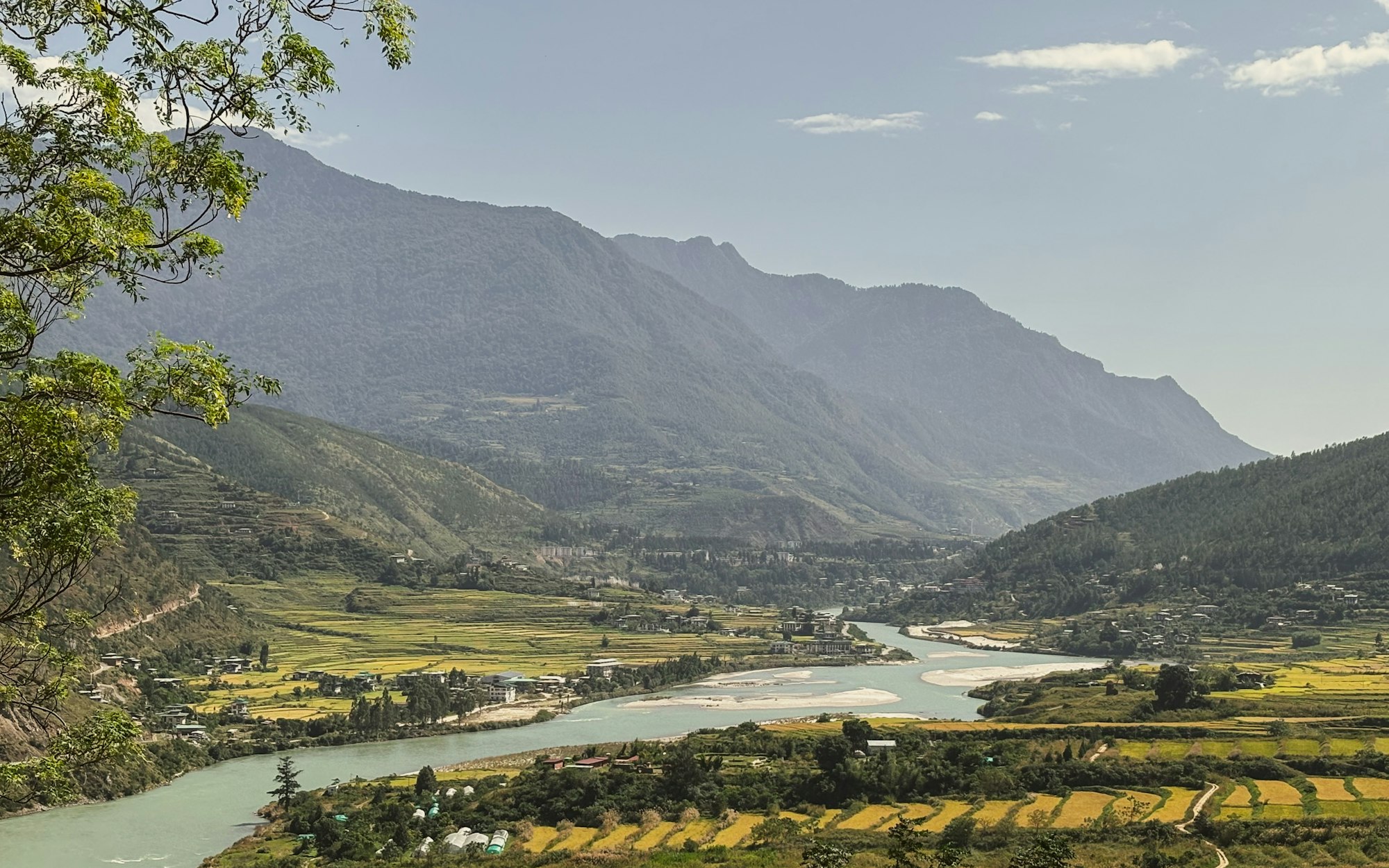
- Day 2: Cross the Dochula pass and its 108 chortens to the warm Punakha valley and Punakha Dzong.
- Day 3: Walk through rice fields to Chimi Lhakhang, then return to Paro.
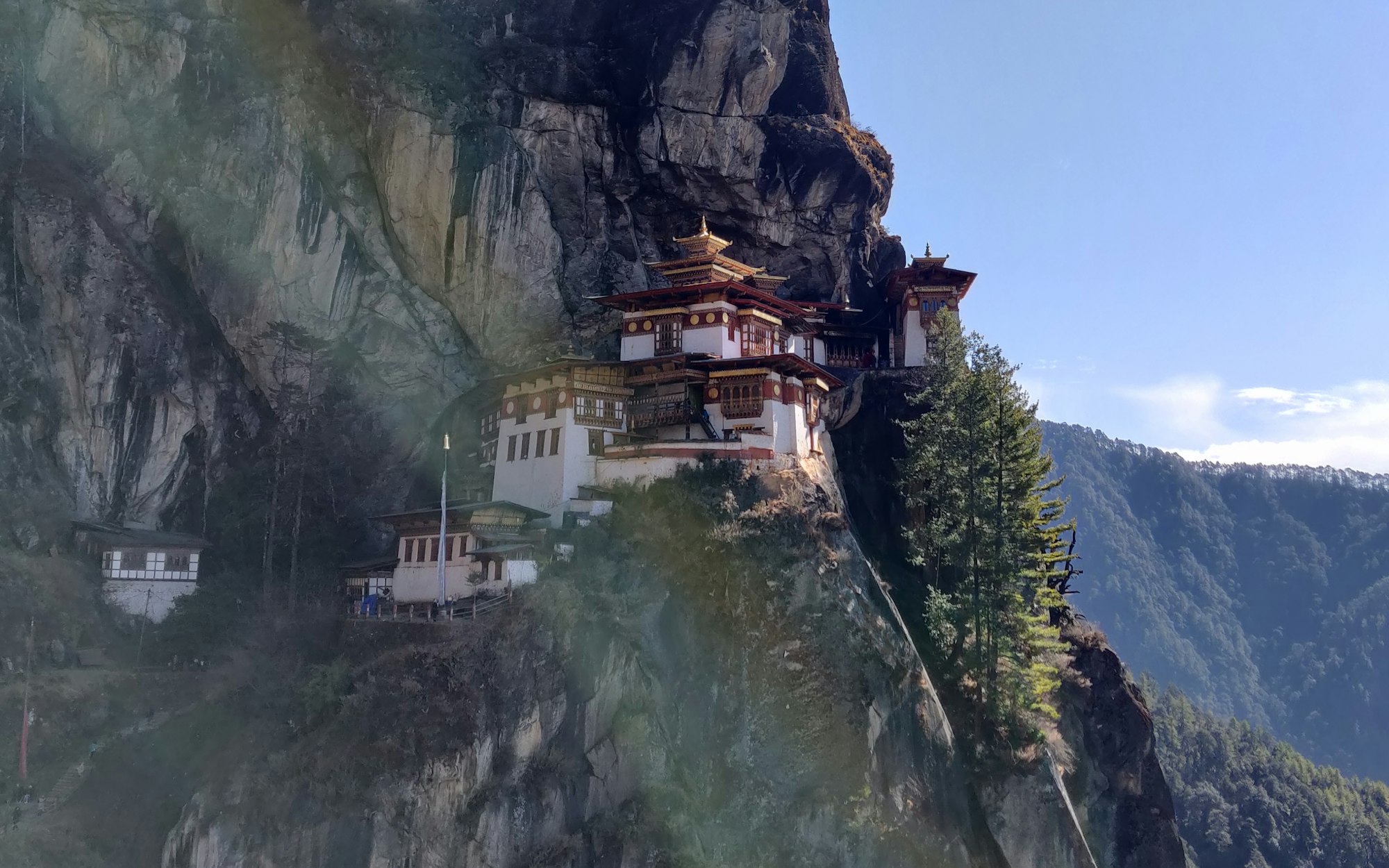
- Day 4: Hike to Paro Taktsang, the Tiger's Nest.
- Day 5: Depart from Paro.
The trade-off is pace. Each day has a long drive or a big hike, and there is little time to linger in Thimphu. Our five-day Bhutan in Brief journey follows this route.
Seven days: the same valleys, at a gentler pace
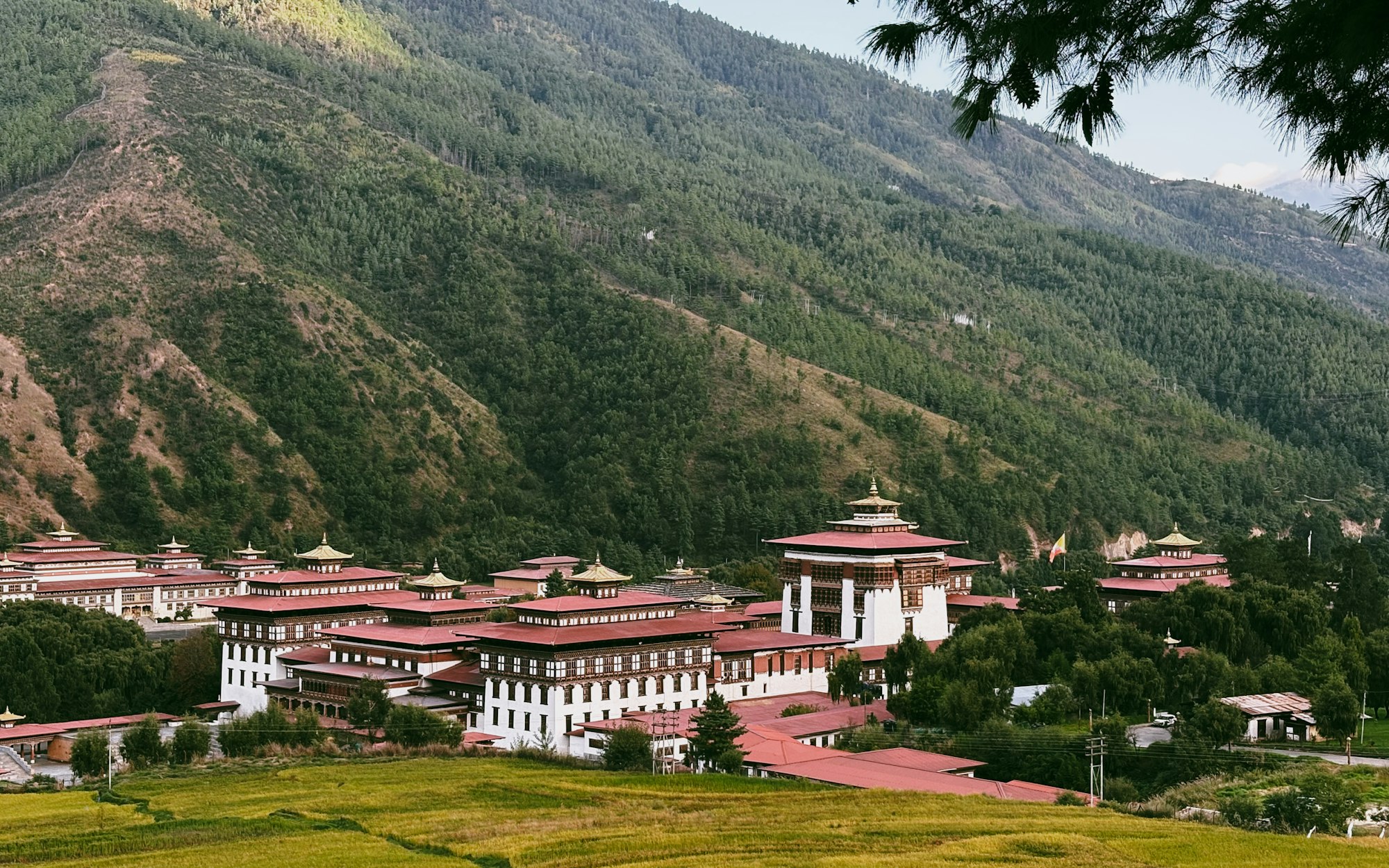
Adding two nights changes the character of the trip more than the route. You gain a full day in Thimphu for its crafts, markets and the Tashichho Dzong, and a full day in the Punakha valley for Chimi Lhakhang, the Khamsum Yulley Namgyal Chorten and a riverside afternoon. The Tiger's Nest hike moves to the end of the journey, when you are used to the altitude.
If you have only one week, this is the length we suggest. It suits families, first-time visitors and anyone who would rather spend an evening at a farmhouse than in the car. Our seven-day Dragon's Heart journey is built this way.
Nine to eleven days: into central Bhutan
With nine days or more you can cross the Black Mountains into central Bhutan, which many travellers say is where the country felt most itself. The route continues east from Punakha to the Phobjikha valley, a wide glacial valley where black-necked cranes spend the winter, then over the Pele La pass to Trongsa and its great dzong, and on to the four valleys of Bumthang, the religious heartland of the country.
The roads are slower here, so these days are fuller, but the reward is quieter valleys, older temples and a sense of how Bhutanese people live away from the capital. On the way back, a domestic flight from Bumthang to Paro saves a long day on the road when flights are operating. Our eleven-day Sacred Heartland journey follows this route.
Nine days is also the usual length for a festival journey, which needs two or three days in one place for the tshechu, or for the Druk Path trek between Paro and Thimphu.
Fourteen days and more: the east and the longer treks
Eastern Bhutan, with Mongar, Trashigang and the weaving villages around them, sees only a small share of visitors. Reaching it by road and returning takes at least two weeks, unless the journey ends by road at Samdrup Jongkhar on the Indian border, which needs Indian visa planning.
The great Himalayan treks also need more time. The Jomolhari treks take around a week to two weeks, and the Snowman trek, one of the hardest treks in the world, takes close to a month. These are specialist journeys and depend on season, permits and fitness.
A ten-day journey, day by day
Ten days is a length many travellers settle on once they see what central Bhutan offers. This is how we often shape it, adjusted to your interests and the season.
- Day 1: Arrive in Paro and settle in; a short walk to Kyichu Lhakhang.
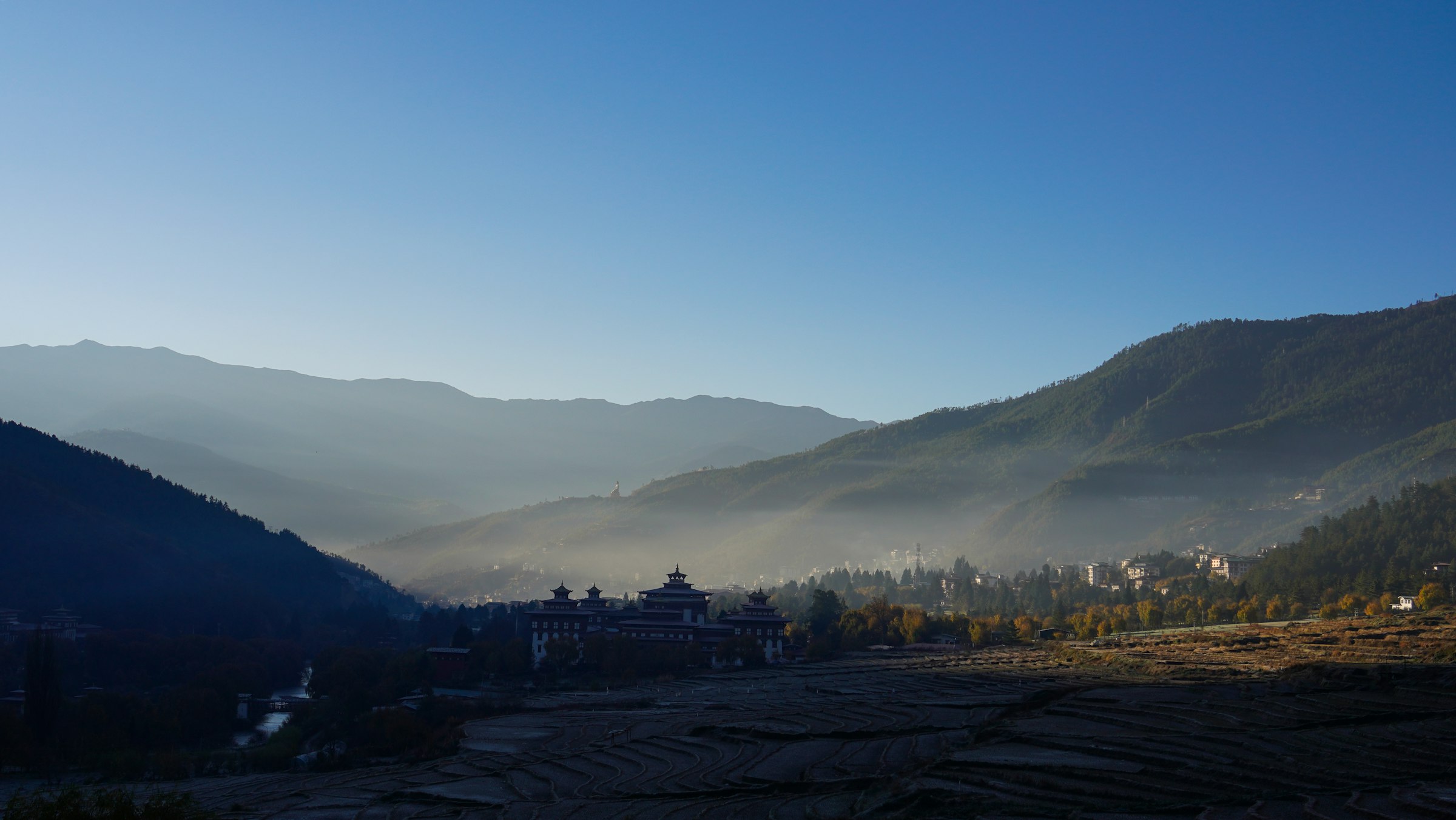
- Day 2: Drive to Thimphu; the Memorial Chorten, Buddha Dordenma and Tashichho Dzong.
- Day 3: Over the Dochula pass to Punakha; Punakha Dzong and the suspension bridge.
- Day 4: Chimi Lhakhang, Khamsum Yulley Namgyal Chorten and an afternoon by the river.
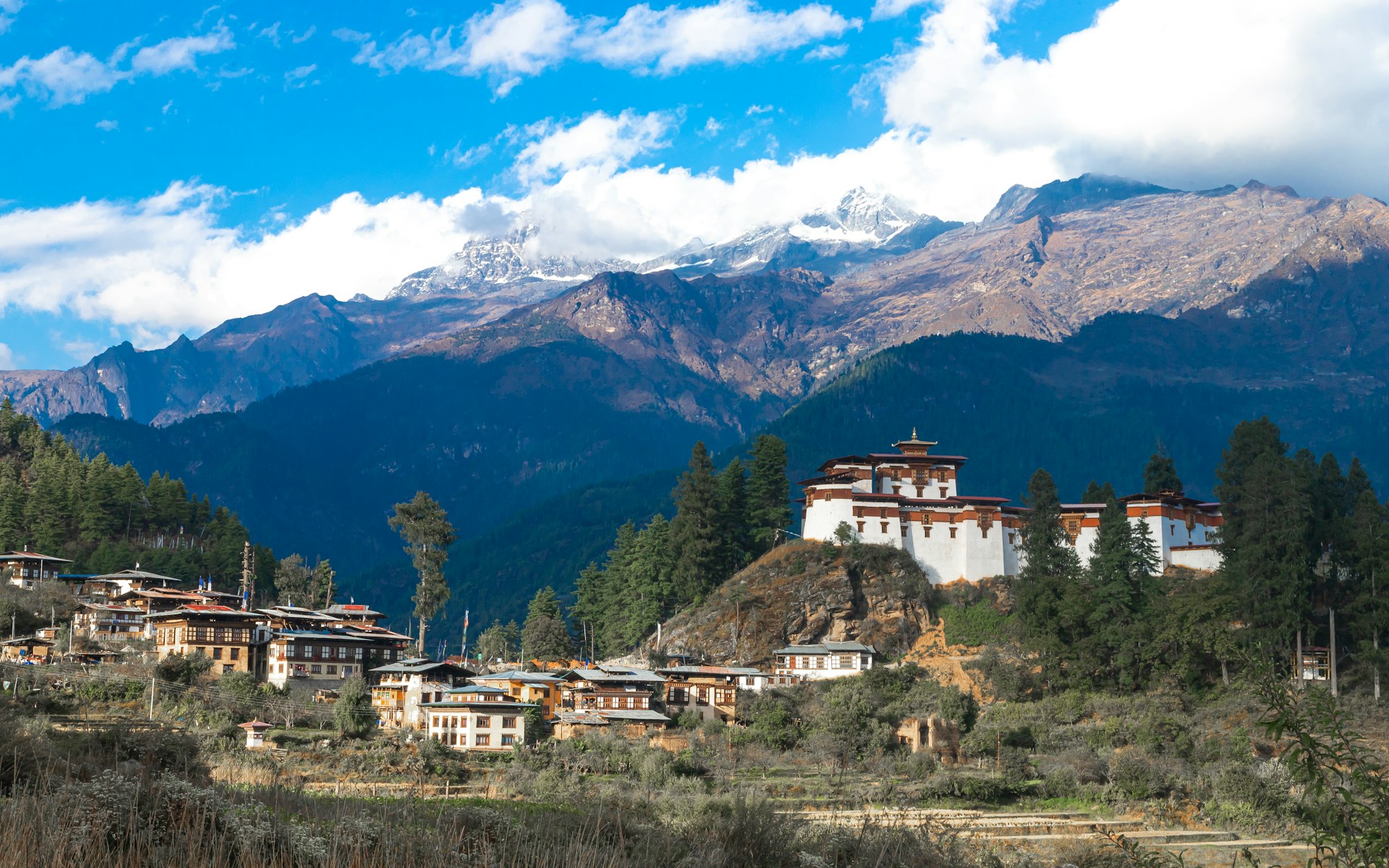
- Day 5: Up to the Phobjikha valley; Gangtey Goenpa and the crane centre.
- Day 6: The Gangtey Nature Trail in the morning, then on to Trongsa.
- Day 7: Trongsa Dzong, then over the Yotong La to Bumthang.
- Day 8: The temples of the Choekhor valley and Mebar Tsho, the Burning Lake.
- Day 9: Fly from Bumthang to Paro when flights are operating, or drive back in stages; the Tiger's Nest hike the next morning if you fly.
- Day 10: Depart from Paro, or hike to Tiger's Nest and depart the following day.
Building your dates around a festival
If seeing a tshechu matters to you, choose the festival first and build the journey around it. Festival dates follow the lunar calendar and move every year, so the Paro Tshechu might fall in March one year and April the next. Most festivals last three to five days, and the most important moments, such as the unveiling of a giant thongdrel, happen on particular mornings.
Two days at a festival is usually enough to see the main dances without tiring of the crowds, which is why festival journeys tend to be a little longer than standard ones. Hotels in Paro and Thimphu fill early for the spring and autumn festivals, so booking several months ahead helps.
Season and length go together
The time of year changes how much you can fit in. In spring and autumn the days are clear and the roads reliable, so a longer route into central Bhutan works well. In the monsoon months, from June to August, landslides can delay journeys on the east–west highway, and we build in more slack. In winter, the western valleys are dry and sunny, but snow can close the high passes on the way to Bumthang for a day or two, so we keep central Bhutan journeys flexible.
Common planning mistakes
- Trying to see Bumthang or the east on a seven-day trip: the drive leaves no time to enjoy it.
- Doing the Tiger's Nest hike on the first full day, before you are used to the altitude.
- Booking international flights with too little time to spare; Paro's mountain airport can see weather delays.
- Filling every day with sights. Some of the best moments in Bhutan are an unplanned conversation or an evening at a farmhouse.
Driving times to plan around
Distances in Bhutan are short, but the roads are mountain roads. These are typical driving times in good conditions, without stops; landslides in the monsoon or snow on the high passes in winter can add time.
- Paro to Thimphu: about 1 hour
- Thimphu to Punakha, over the Dochula pass: about 2.5 to 3 hours
- Punakha to the Phobjikha valley: about 3 hours
- Phobjikha to Trongsa: about 3 to 4 hours
- Trongsa to Bumthang (Jakar): about 2.5 hours
- Paro to the Haa valley, over the Chele La pass: about 2.5 hours
How the daily fee affects the length of your trip
Bhutan charges visitors a Sustainable Development Fee for every night of their stay. At the time of writing it is US$100 per adult per night, a rate the government has set until 31 August 2027, with half the rate for children aged 6 to 12 and no fee for children under 6. The fee funds free healthcare, education and conservation, and it is included in the price we quote.
Because the fee is charged per night rather than per sight, a slower trip is not much more expensive per experience than a fast one. Seven unhurried days often give more than five crowded ones, and we would usually rather take a place out of an itinerary than add another long drive.
Which length suits which traveller
- A short stopover or a first taste of the Himalaya: 5 days
- A first visit with time to enjoy it: 7 days
- Festivals, the Druk Path trek, or a slower wellness journey: 8 to 9 days
- Central Bhutan, cranes and the temples of Bumthang: 10 to 11 days
- Eastern Bhutan, textiles and remote villages, or a long trek: 14 days or more
Our advice
Plan around the valleys you most want to see rather than a number of days, leave one day without a long drive in every four or five, and keep the Tiger's Nest hike for the end. If you tell us your dates and interests, we will suggest the length that fits, and we will be honest if a route is too much for the time you have.
Frequently asked questions
Is 3 or 4 days enough for Bhutan?
It is possible to see Paro and Thimphu in three or four days, but you would miss Punakha and spend much of the time in transit. If your time is that short, we suggest staying in the Paro and Thimphu valleys and including the Tiger's Nest hike.
Is there a minimum stay in Bhutan?
There is no minimum number of nights for most visitors. The Sustainable Development Fee is charged per night, so the cost rises with each night of your stay.
Can I visit eastern Bhutan in one week?
Not comfortably. Eastern Bhutan is several long days by road from Paro, so a journey there usually needs at least two weeks, or a domestic flight in one direction when flights are operating.
What is the best length for a first visit?
Seven days is the length we recommend most often. It covers Paro, Thimphu, Dochula, Punakha and the Tiger's Nest hike at a pace that leaves time to enjoy them.

Written by
The Bhutan Travel Nexus team, Bhutan-based travel designers who plan private journeys across the kingdom. Facts were checked in ; fees and rules can change, so we confirm them when you book.