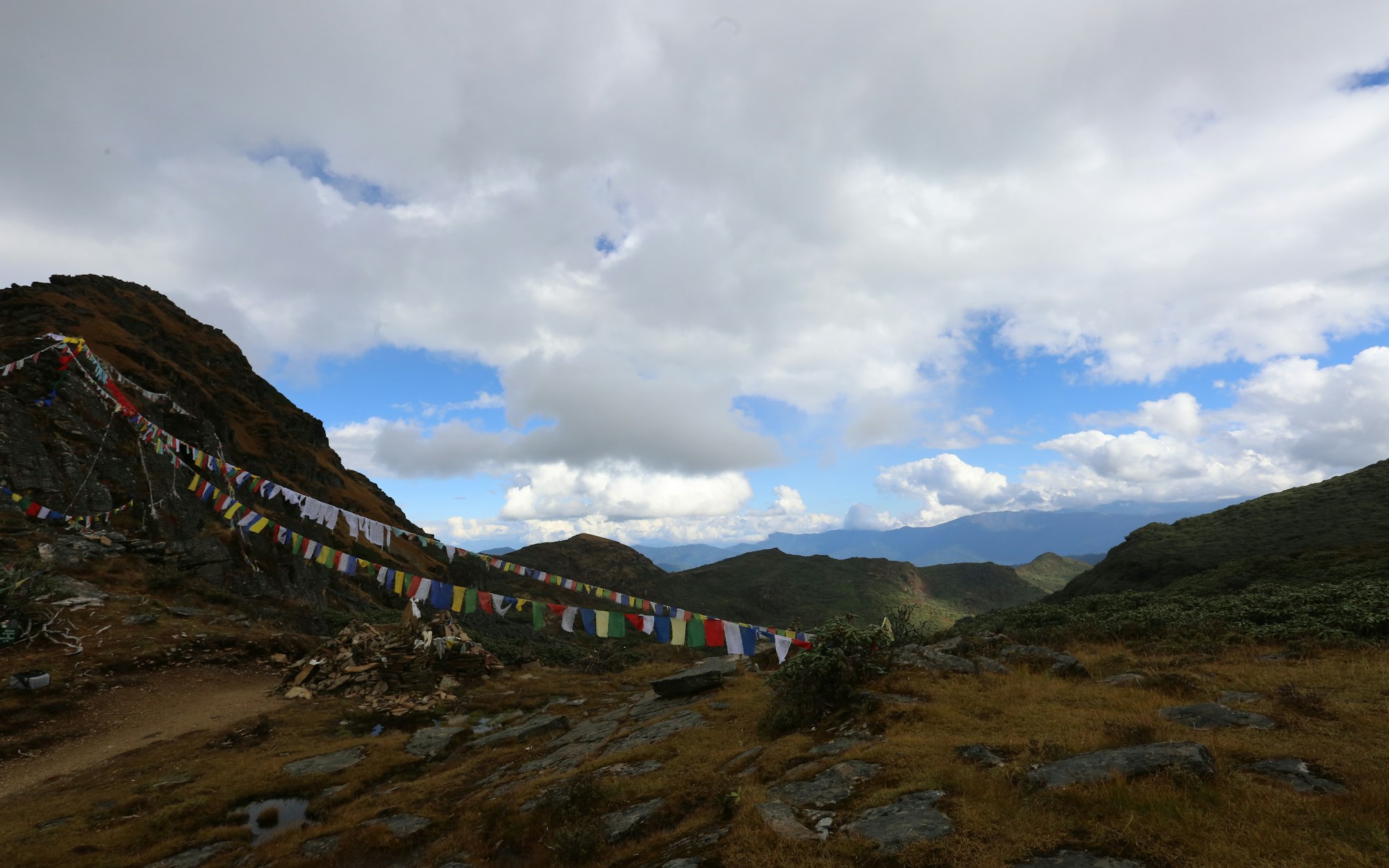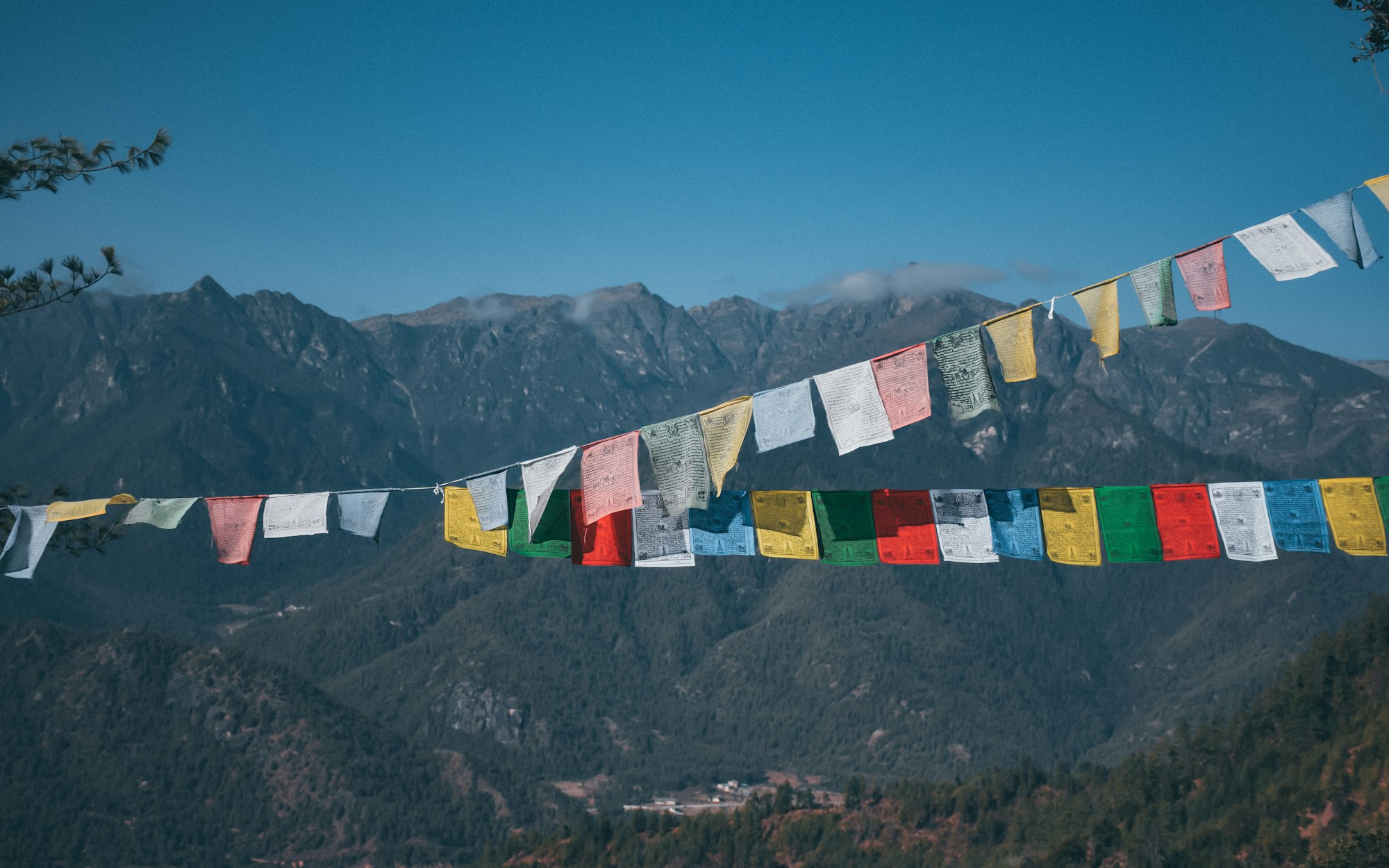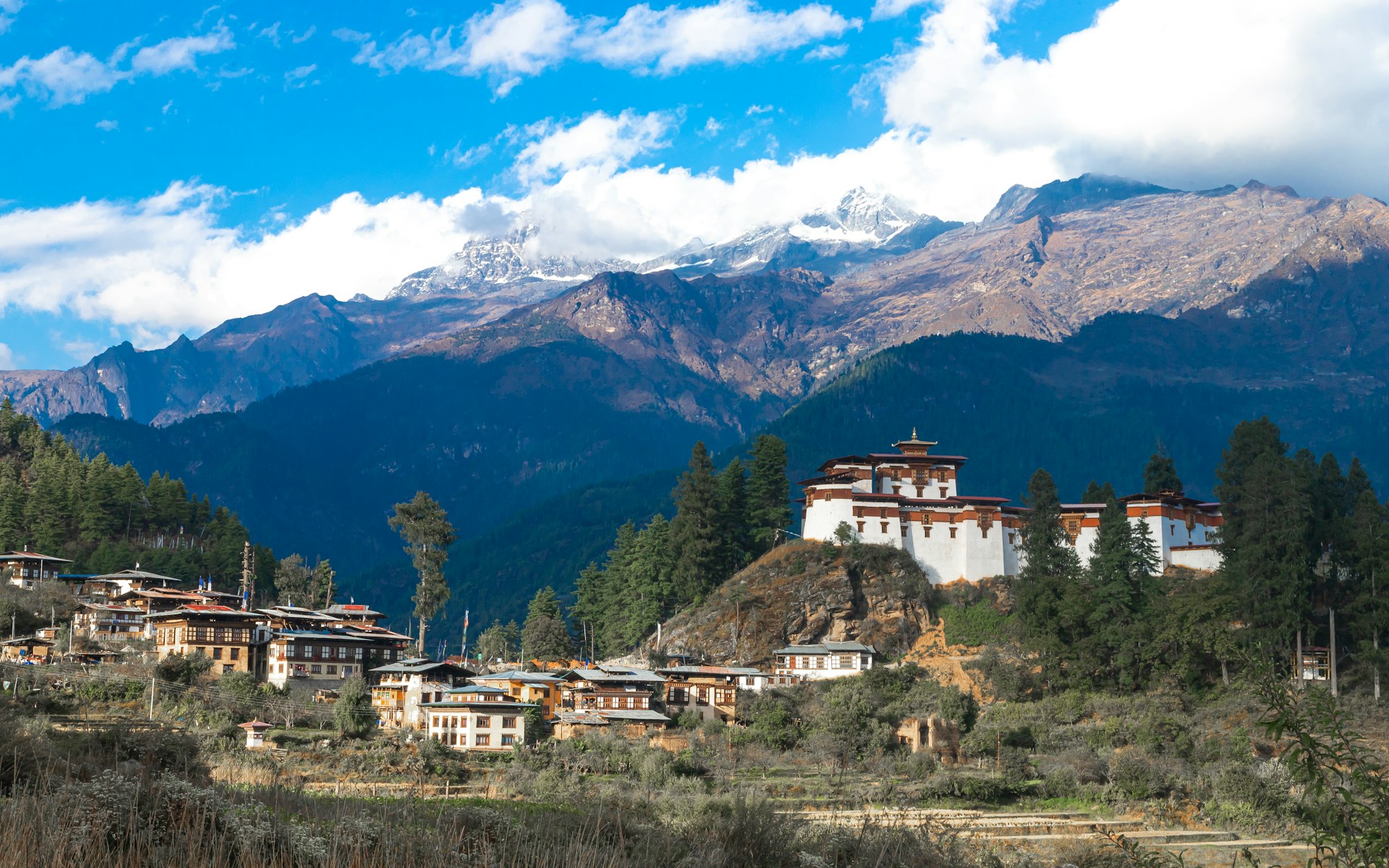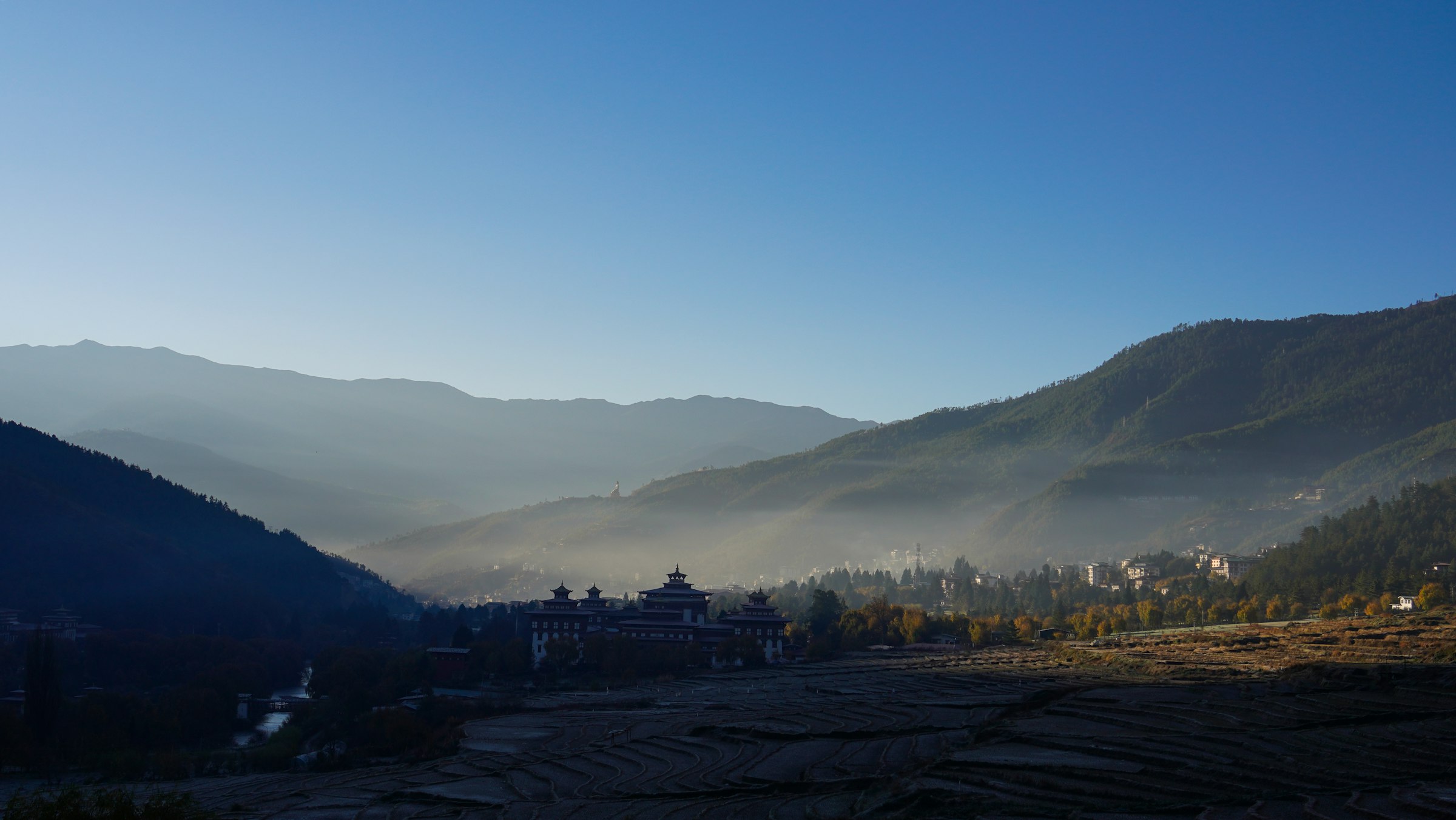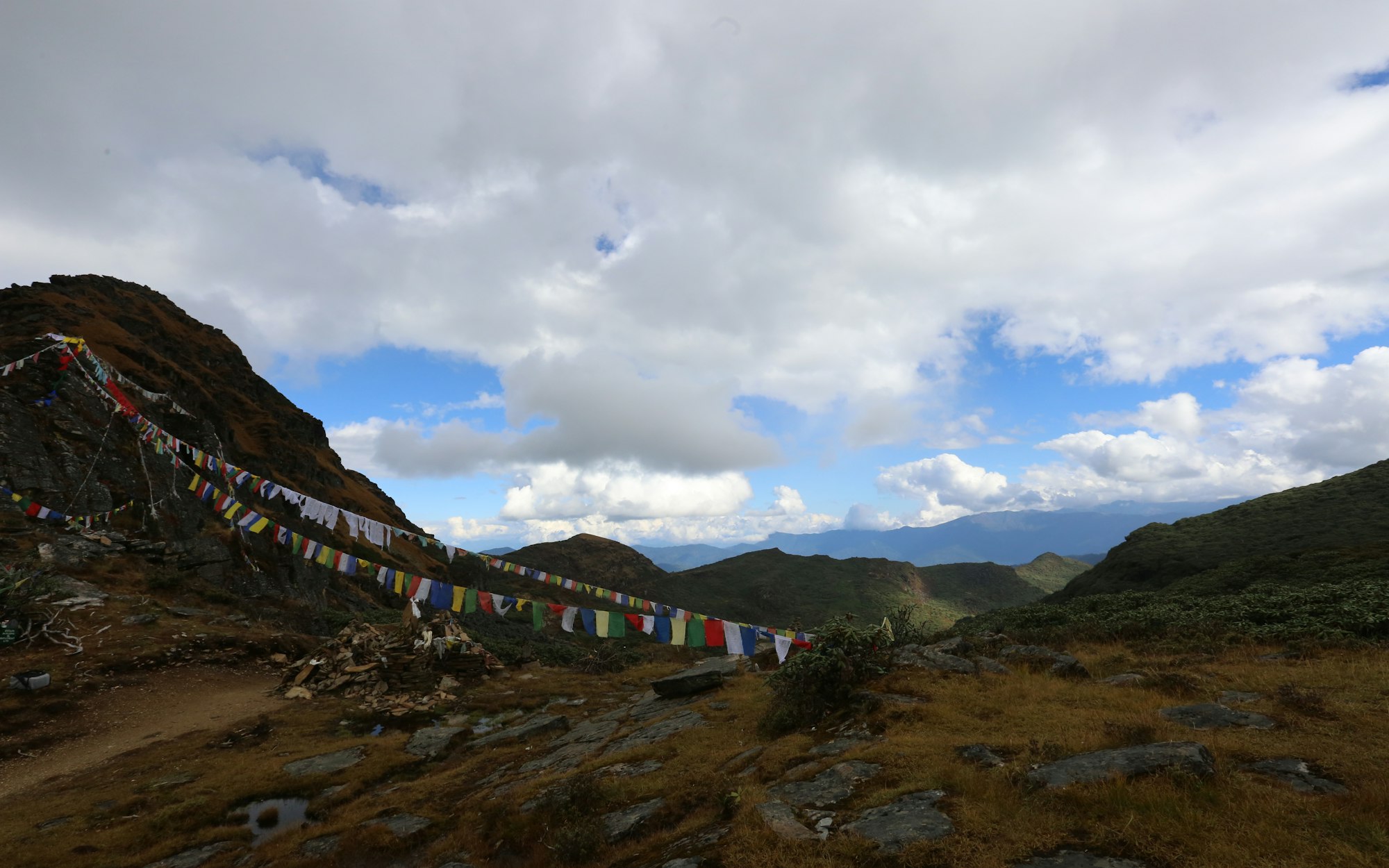
The Druk Path is the trek most visitors to Bhutan choose, and for good reason. In about five days of walking it crosses the mountains between Paro and Thimphu, past a ruined dzong, a string of high alpine lakes and a monastery perched above the capital, with views on clear days to Jomolhari and the Himalayan peaks along the border.
The route at a glance
The trail begins above the National Museum in Paro and climbs through forest to the ridge. It then follows the high ground north-east for several days, camping beside lakes, before descending through the monastery complex of Phajoding to the edge of Thimphu. Distances are modest, typically 10 to 11 kilometres a day, but most of the walking is above 3,500 metres, so the altitude sets the pace.
Exact altitudes vary between maps and operators by a hundred metres or so; the figures below are approximate.
- Day 1 of trekking: Paro to Jele Dzong (about 3,450 m), a steady climb of five to six hours through blue pine and rhododendron.
- Day 2: Jele Dzong to Jangchulakha (about 3,770 m), along the ridge through rhododendron forest, with yak herders' pastures near camp.
- Day 3: Jangchulakha to Jimilang Tsho (about 3,870 m), a beautiful walk to the first of the lakes.
- Day 4: Jimilang Tsho to Simkota Tsho (about 4,100 m), past Janetso lake to the highest camp.
- Day 5: Simkota Tsho to Phajoding (about 3,750 m), over the highest point of the trek with views of the Himalaya and the Thimphu valley.
- Day 6: Phajoding down to Thimphu, about three hours, mostly downhill through forest.
How hard is it?
The Druk Path is often described as moderate, and that is fair. There are no technical sections, the path is clear and the daily distances are short. What makes it a real trek is the altitude: you sleep above 3,400 metres for four or five nights, and the first day's climb from Paro is long.
If you can walk for five or six hours on hilly ground, carrying a light day pack, you can enjoy the Druk Path. Regular walking or hiking in the months before your trip makes a big difference. People with heart or lung conditions should speak to their doctor first.
Altitude and acclimatisation
The most important part of planning a Druk Path journey is the time before the trek starts. We spend at least two days in the Paro valley, at around 2,200 metres, before setting out, and we usually include the hike to Tiger's Nest, which climbs to about 3,100 metres and is excellent preparation.
Mild symptoms such as a headache or poor sleep on the first night are common and usually pass. Your guide is trained to watch for the signs of altitude sickness, and the route can be changed or the trek ended early if needed; the answer to any serious symptom is always to go down.
When to go
The best months are March to May and late September to November. Spring brings rhododendrons in bloom along the ridge, while autumn usually has the clearest skies and the best mountain views. Nights are cold at the higher camps in both seasons and can fall below freezing.
The monsoon, from June to August, brings rain, leeches and cloud that hides the views. In winter, from December to February, snow can close the high section of the trail, and the trek is often not possible.
Camps, food and crew
There are no lodges on the Druk Path; you camp. A trekking crew of a licensed trekking guide, a cook and helpers travels with you, and horses or yaks carry the tents, food and your main bag, so you walk with only a day pack. Camps are set up before you arrive, with sleeping tents, a dining tent and a toilet tent.
The food is a pleasant surprise for most trekkers: hot drinks in the morning, a packed or hot lunch on the trail, and a three-course dinner cooked over gas in the kitchen tent. Water is boiled or filtered for you.
The lakes
The middle of the trek is the most beautiful. Jimilang Tsho, the 'lake of the sand ox', is named after a legendary bull said to have emerged from its waters, and is known for its large trout. Janetso and Simkota Tsho lie higher up in open, wind-swept country above the tree line, where the only sounds are the wind and the bells of grazing yaks.
Phajoding monastery
On the last full day the trail drops to Phajoding, a group of temples and meditation retreats on the mountainside above Thimphu, where the thirteenth-century yogi Phajo Drugom Zhigpo, who brought the Drukpa tradition to Bhutan, is said to have meditated. Young monks study here, and the view from the monastery over the whole Thimphu valley is a fitting end to the trek.
A typical day on trek
Days on the Druk Path follow a gentle rhythm. A member of the crew brings tea or coffee to your tent at around six, followed by a bowl of warm water for washing. After breakfast in the dining tent you set off with your guide, while the crew packs camp and overtakes you with the horses later in the morning.
Lunch is taken on the trail, either packed or cooked by the crew at a sheltered spot. Most days end in early afternoon, leaving time to rest, read, walk around the lake or watch the light change on the mountains. Dinner is served early, and most trekkers are asleep soon after dark.
How to prepare
The best preparation is walking, especially uphill. In the two or three months before your trip, try to walk several times a week, building up to a long walk of five or six hours on hilly ground at least once or twice, ideally carrying a day pack. Stairs and hill walks build the leg strength you will need for the first day's climb and the long descents.
Wear in your boots before you travel, and walk in the clothes and layers you plan to use. Sleep well and drink plenty of water in the days before the trek, and avoid alcohol during the first nights at altitude.
Weather on the trail
Even in the best seasons, mountain weather changes quickly. Mornings in autumn are often clear and cold, with cloud building in the afternoon. In spring, showers are more likely and the views can be hazy, but the rhododendrons make up for it. Expect daytime temperatures that feel warm in the sun and nights that fall towards or below freezing at Jimilang and Simkota.
Caring for the mountains
The Druk Path passes through pastures used by herders and through some of the most beautiful high country near the capital. Stay on the trail, carry out all litter including tissues, use the toilet tent at camp, and never disturb the lakes, which are considered sacred. Your guide will explain local customs, such as not shouting near the lakes and walking clockwise around chortens and mani walls.
What to pack
- Broken-in walking boots with ankle support
- A warm down jacket, fleece, thermal base layers, hat and gloves for the evenings
- A waterproof jacket and trousers
- A sleeping bag rated to about -10°C (we can arrange a rental)
- Trekking poles, which help a great deal on the long descents
- Sunscreen, sunglasses and a sun hat; the sun is strong at altitude
- A head torch, personal medicines, blister plasters and water purification tablets as a back-up
- A small day pack with a rain cover
Permits and rules
All treks in Bhutan must be arranged through a licensed tour operator with a licensed guide. We handle the trekking permit together with your visa and Sustainable Development Fee, and the full trek is included in your quoted price. Please carry out what you carry in; the crew packs out all rubbish from every camp.
Adding more to the journey
Because the Druk Path ends in Thimphu, it combines well with a few days in the Punakha valley afterwards, which at around 1,250 metres feels warm and restful after the high camps. Our nine-day Above the Clouds journey includes two days in Paro, the trek, and a day in Thimphu at the end.
Frequently asked questions
How long is the Druk Path trek?
The Druk Path is about 55 kilometres and usually takes five days of walking, from Paro to Thimphu, within a journey of around nine days.
What is the highest point of the Druk Path?
The highest point is around 4,200 metres, near Simkota Tsho, crossed on the day before the descent to Phajoding.
Do I need trekking experience for the Druk Path?
No technical experience is needed, but you should be comfortable walking five to six hours a day on hilly ground. Some preparation walks before the trip are strongly recommended.
Can I trek in Bhutan without a guide?
No. All treks in Bhutan must be booked through a licensed tour operator and accompanied by a licensed guide.

Written by
The Bhutan Travel Nexus team, Bhutan-based travel designers who plan private journeys across the kingdom. Facts were checked in ; fees and rules can change, so we confirm them when you book.