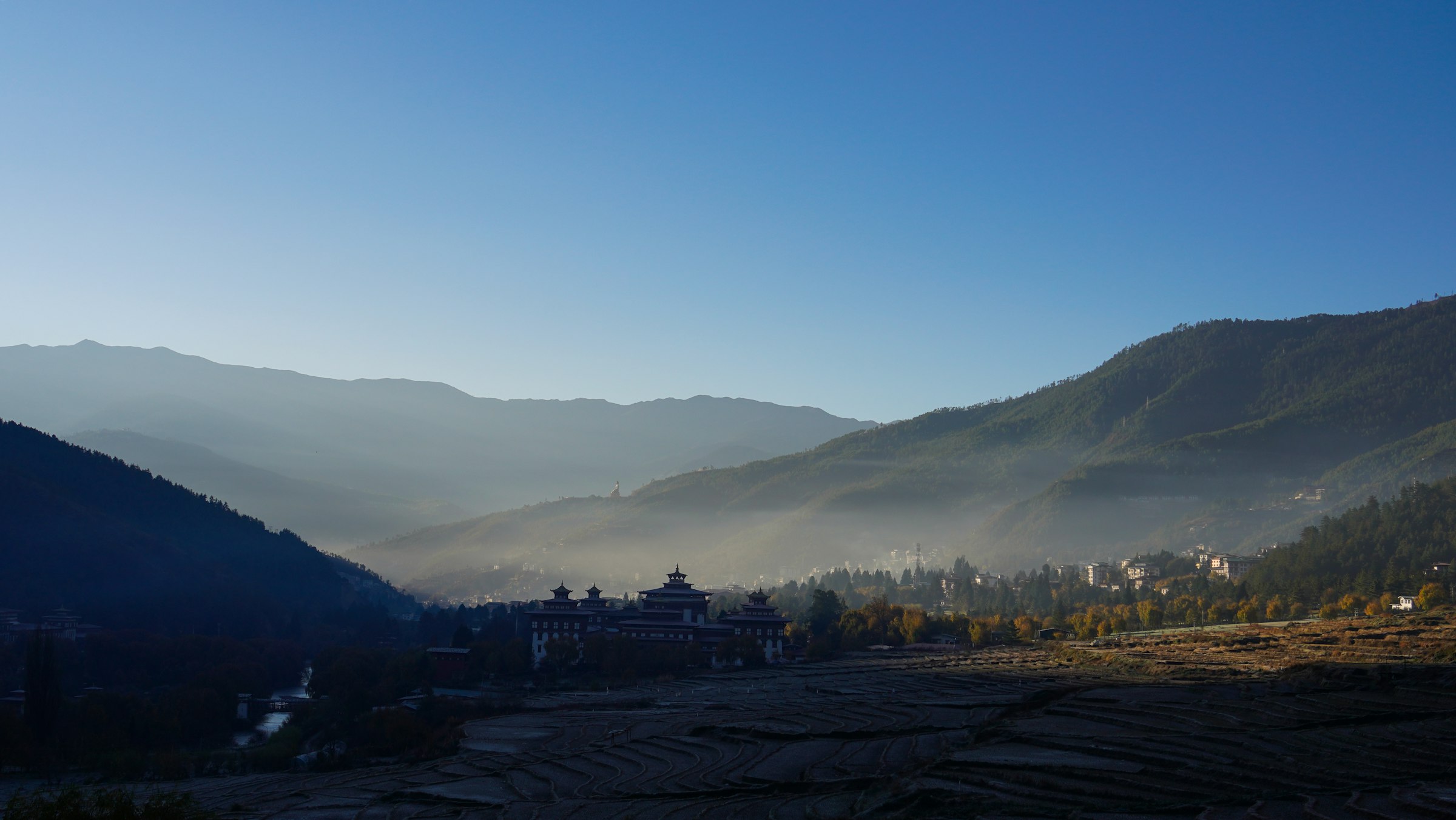
Phobjikha is a wide glacial valley on the western slopes of the Black Mountains, overlooked by the great monastery of Gangtey Goenpa. Each winter it becomes home to hundreds of black-necked cranes that fly in from the Tibetan plateau, and the whole valley seems to slow down to welcome them.
The valley
Phobjikha is one of the most beautiful places in Bhutan: a broad, flat-bottomed valley of marshland and potato fields, ringed by forested hills, at around 2,900 metres. Its wide open space is unusual in a country of steep, narrow valleys, and it feels more like a high moor than the Himalaya.
On a spur above the valley stands Gangtey Goenpa, one of the most important monasteries of the Nyingma tradition in Bhutan, founded in the early seventeenth century and carefully restored in recent years. The village of Gangtey grew up around it, and its farmhouses and lodges look out over the marshes where the cranes feed.
The black-necked crane
The black-necked crane is a tall, elegant bird with grey plumage, a black head and neck, and a small red crown. It breeds on the high Tibetan plateau and in Ladakh, and spends the winter in lower valleys in Tibet, China and Bhutan. It is listed as Near Threatened on the IUCN Red List.
In Bhutan the cranes are revered. They appear in folk songs, and they are seen as messengers and symbols of good fortune. Local people say the cranes circle Gangtey Goenpa three times when they arrive in autumn, and again before they leave in spring.
When to see them
The cranes usually arrive in late October or November and leave again in February or March. December and January are often the best months, when the population is settled and the valley is clear and frosty.
Numbers have grown steadily thanks to protection. Bhutan's national count recorded about 700 wintering cranes in the 2024–25 winter, a record, and the great majority spend the season in Phobjikha. Smaller numbers winter in Bumdeling in eastern Bhutan.
Watching responsibly
The cranes feed in the marshes on the valley floor, and they are easily disturbed. The best place to start is the Black-necked Crane Information Centre, run by the Royal Society for Protection of Nature, which has telescopes and an observation room looking over the marshes, as well as exhibits about the birds.
- Keep to paths and viewpoints; never walk out into the marshes.
- Keep your voice low and do not chase or approach the birds for photos.
- Use binoculars or a zoom lens rather than getting closer.
- Early morning and late afternoon, when the cranes fly between roosts and fields, are the most rewarding times.
The Black-necked Crane Festival
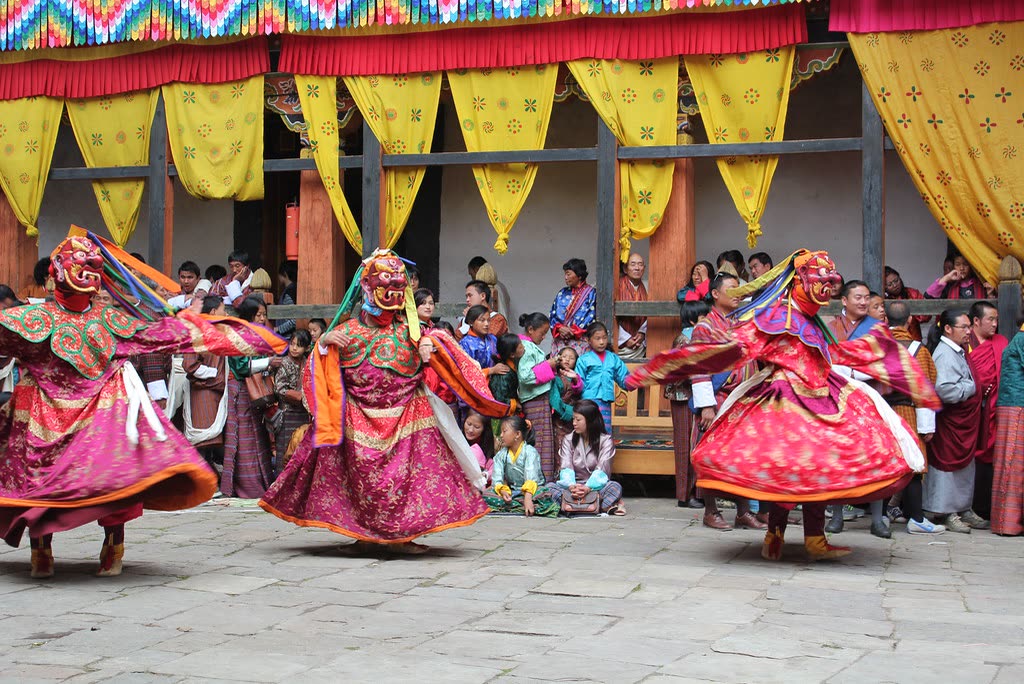
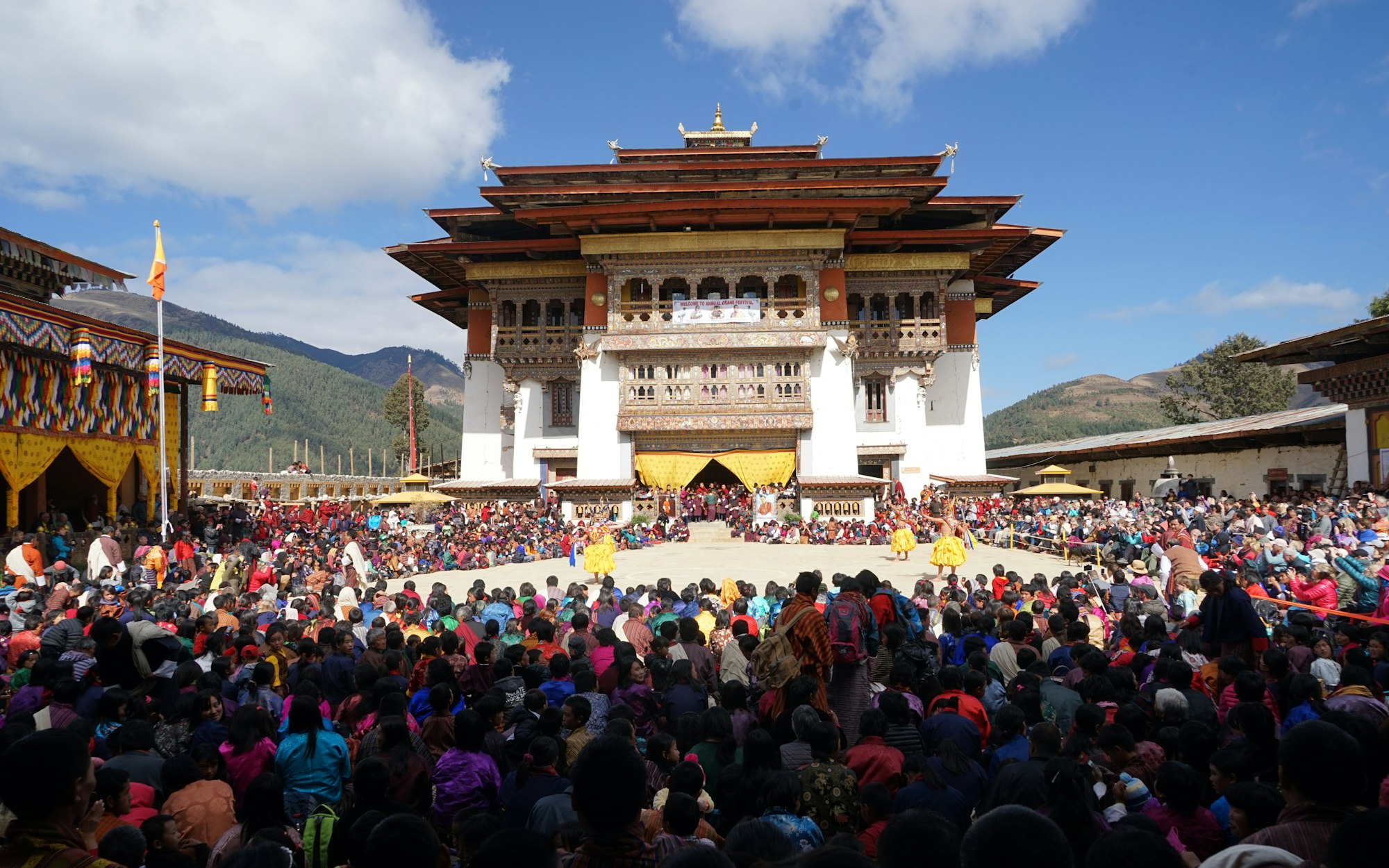
Every year in mid-November, usually on the 11th, the community celebrates the cranes' return with a festival in the courtyard of Gangtey Goenpa. Schoolchildren perform dances dressed as cranes, local groups sing folk songs and perform masked dances, and conservation messages are shared with the crowd.
It is a small, joyful festival, very different from the great tshechus, and a lovely time to visit Phobjikha. The tentative date for 2027 is 11 November; see our 2027 festival calendar for every festival of the year.
A valley that protects its cranes
Phobjikha is a protected area, and the community has made remarkable choices to keep the valley safe for the cranes. Electricity reached the valley later than many places, and when it did, power lines in key areas were laid underground so the cranes would not collide with them. Lights are kept low at night, and farming practices are managed with the birds in mind.
The valley's wetlands are also listed as a Ramsar Wetland of International Importance, and local management plans try to balance the needs of farming families, tourism and the cranes. It is a living example of Gross National Happiness in practice.
The Gangtey Nature Trail
The best way to see the valley is on foot. The Gangtey Nature Trail starts near the monastery and winds down through pine forest and across open meadows to the valley floor, past farmhouses and small chortens, taking around one and a half to two hours at an easy pace. It is gentle, mostly downhill, and beautiful in every season.
Longer walks lead over the surrounding ridges to neighbouring villages, and in summer the valley is green and full of wildflowers, even without the cranes.
Staying in Phobjikha
Phobjikha has simple farmhouse homestays, comfortable family-run lodges and a few luxury lodges with views over the valley. Nights are cold from autumn to spring, so rooms usually have wood-burning stoves or heaters, and a traditional hot-stone bath at a farmhouse is a wonderful way to end a day. Most journeys spend one or two nights here.
Beyond the cranes
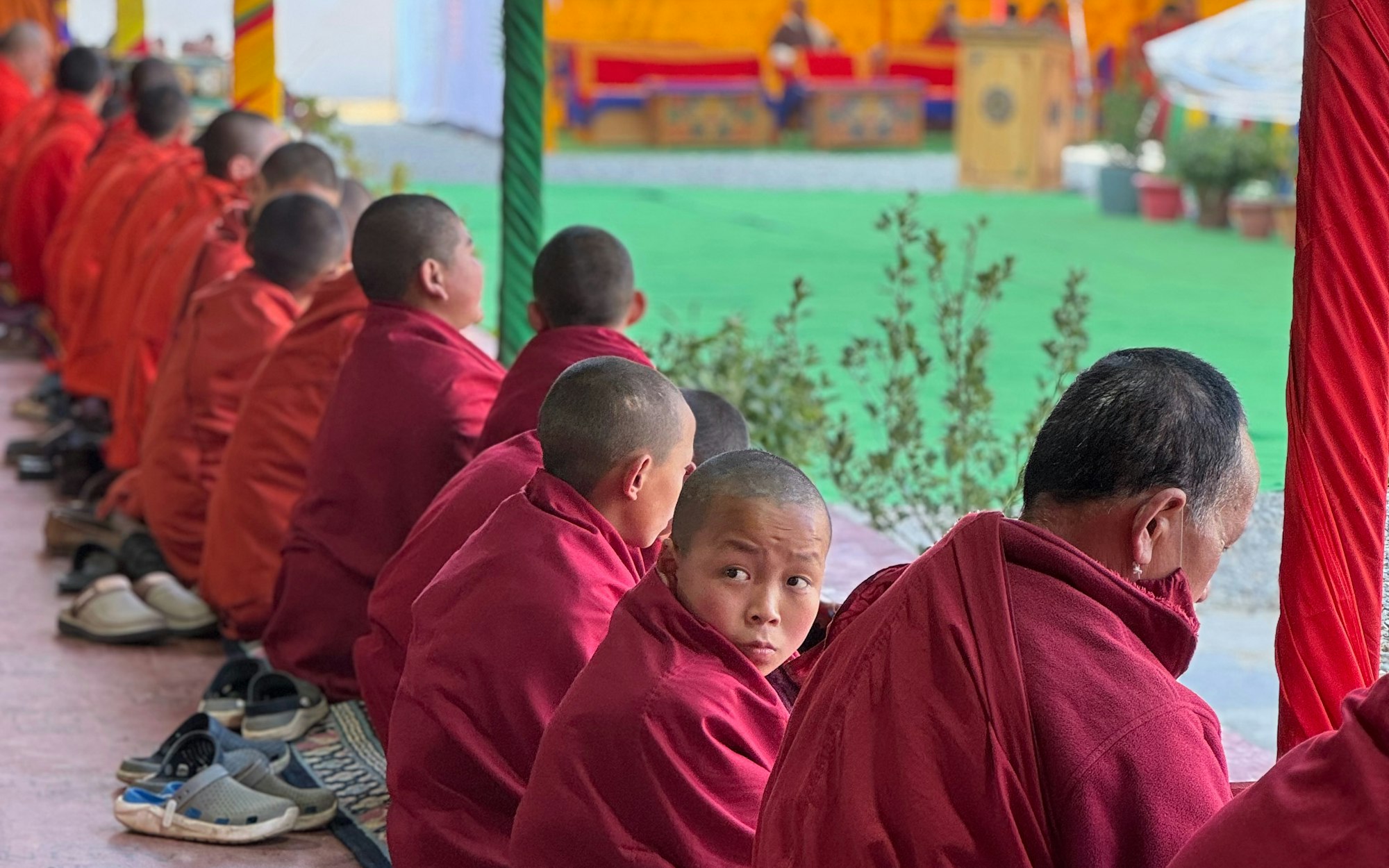
Phobjikha rewards a visit in any season. In spring the hillsides glow with rhododendrons and farmers plant potatoes, the valley's main crop. In summer the meadows are green and full of wildflowers. In autumn the fields are harvested and the first cranes appear. Whatever the season, Gangtey Goenpa, with its courtyard, temples and young monks, is worth a visit.
The forests around the valley are also home to many other birds, and a quiet early-morning walk with binoculars can be very rewarding. Ask your guide which species are around at the time of your visit.
What to pack for a winter visit
- A warm down jacket, hat and gloves: winter mornings in Phobjikha are often well below freezing.
- Thermal layers and warm socks for evenings in the lodges.
- Comfortable walking shoes for the Nature Trail, which can be frosty or muddy.
- Binoculars for watching the cranes from a respectful distance.
- Sunglasses and sunscreen: winter days are often bright and clear.
Getting there
Phobjikha lies off the main east–west road, about three hours by road from Punakha via Wangdue Phodrang, climbing through forest to the Lawala pass before dropping into the valley. It is a natural stop on any journey heading to central Bhutan, and our Sacred Heartland and Quiet Path journeys both spend time here.
Frequently asked questions
When can you see black-necked cranes in Bhutan?
The cranes usually arrive in Phobjikha in late October or November and leave in February or March. December and January are often the best months to see them.
How many black-necked cranes winter in Bhutan?
Bhutan's national count recorded about 700 wintering cranes in the 2024–25 winter, a record. Most of them spend the season in the Phobjikha valley.
When is the Black-necked Crane Festival?
The festival is held at Gangtey Goenpa in mid-November, usually on 11 November. The tentative date for 2027 is 11 November.
How far is Phobjikha from Punakha?
Phobjikha is about three hours by road from Punakha, via Wangdue Phodrang and the Lawala pass.

Written by
The Bhutan Travel Nexus team, Bhutan-based travel designers who plan private journeys across the kingdom. Facts were checked in ; fees and rules can change, so we confirm them when you book.