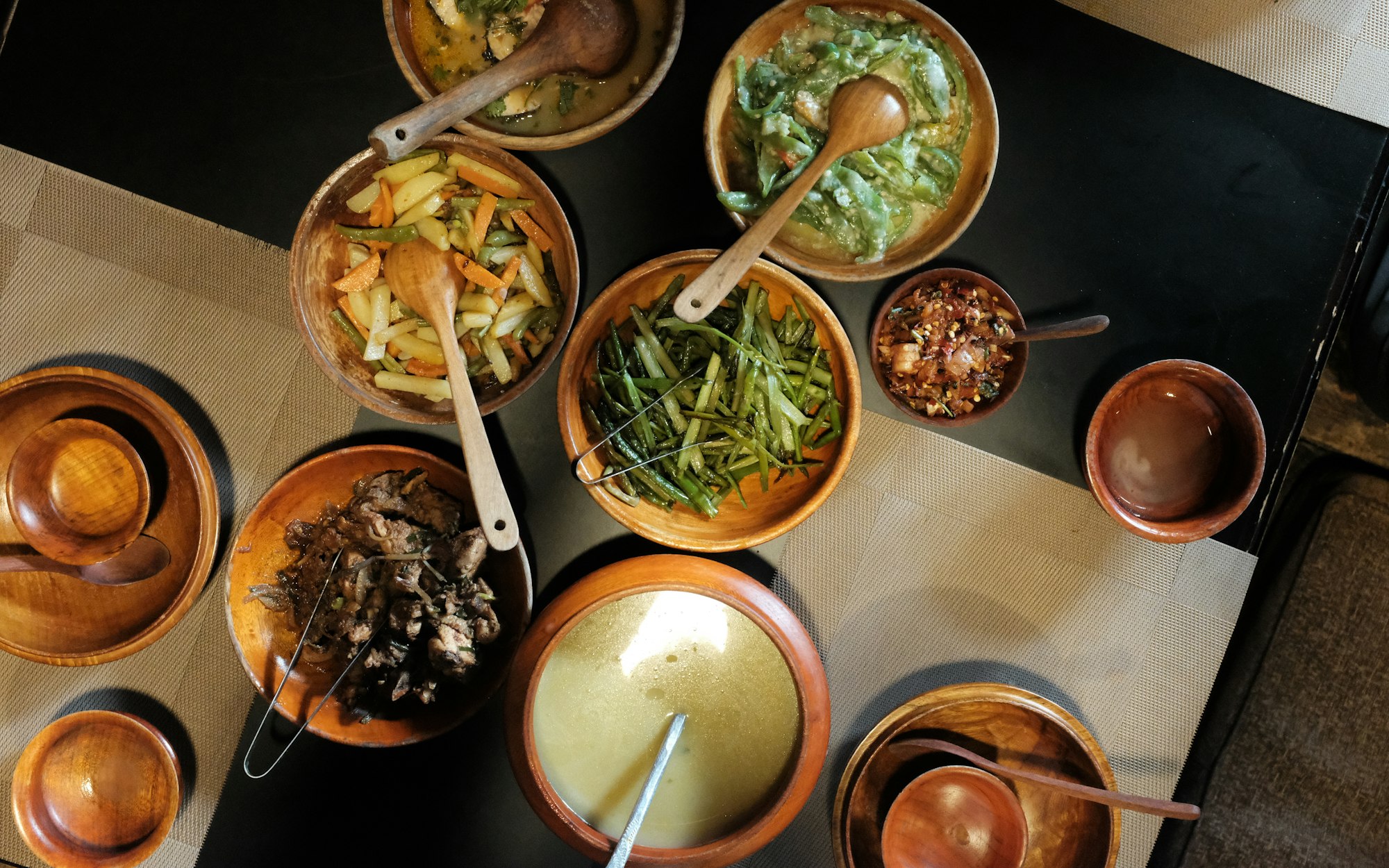
Bhutanese cooking is simple, warming and built around two ingredients that surprise most visitors: chillies, which are eaten as a vegetable rather than a spice, and a soft farmhouse cheese called datshi. Add red rice, buckwheat from the high valleys and a bowl of butter tea, and you have the food of a mountain kingdom.
Ema datshi, the national dish
Ema means chilli and datshi means cheese, and that is almost the whole recipe. Large green or dried red chillies are sliced and simmered with onion, tomato and datshi until the cheese melts into a thick, glossy sauce. It is eaten at home, in offices and at festivals, often at every meal of the day.
Datshi is a soft, slightly sour cheese made from cow's or yak's milk after the butter has been removed. The same sauce is used with other vegetables: kewa datshi with potatoes, shamu datshi with mushrooms, and kewa datshi is the gentlest place for a first-time visitor to start.
Bhutanese chillies are hot, and Bhutanese people eat them in quantities that astonish visitors. In autumn you will see them drying in red sheets on the roofs of farmhouses across the country.
Red rice and the rest of the plate
A Bhutanese meal is built around rice, and the most prized is red rice, a medium-grain variety grown in the Paro valley and other western valleys. It is semi-milled, so it keeps a nutty taste and a pinkish colour when cooked. In higher valleys where rice will not grow, buckwheat, barley and wheat take its place.
Around the rice you will usually find a datshi dish, a meat dish if the family eats meat, cooked greens, and ezay, a fiery relish of chilli, onion and tomato that every household makes slightly differently.
Dishes to try
- Ema datshi: chillies in cheese sauce, the national dish
- Kewa datshi: potatoes and cheese, mild and comforting
- Shamu datshi: wild or farmed mushrooms with cheese
- Phaksha paa: pork cooked with dried chillies and radish or bok choy
- Jasha maru: a spiced chicken stew with ginger, garlic and tomato
- Momos: steamed dumplings filled with cheese, vegetables or meat
- Hoentay: buckwheat dumplings from the Haa valley, filled with turnip greens and cheese
- Puta: buckwheat noodles from Bumthang, often eaten with mustard oil and chilli
- Khuli: buckwheat pancakes, another Bumthang speciality
- Zow: crunchy fried rice, a snack served with butter tea
Regional food: west, centre and east
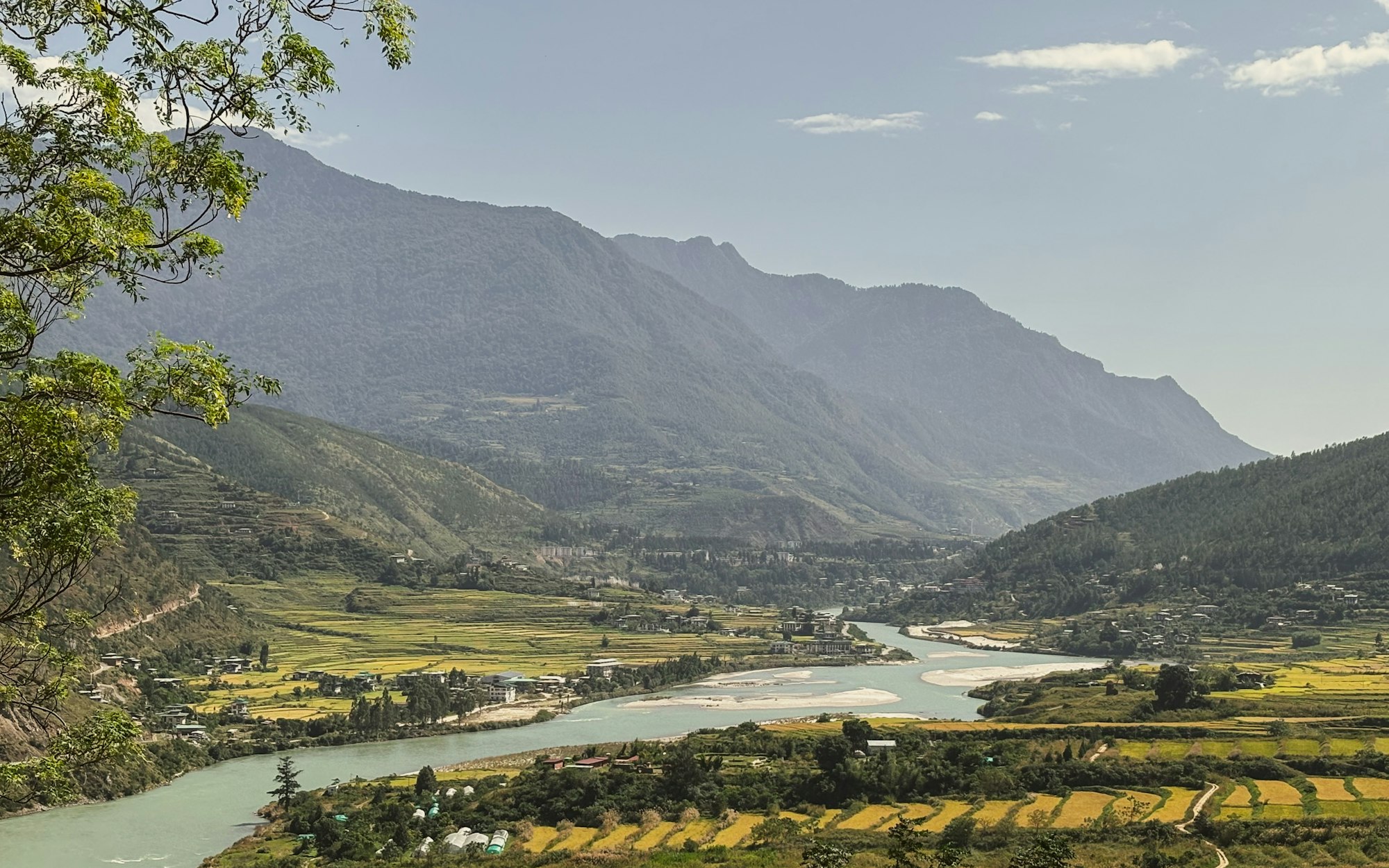
Food changes with altitude. The warm Punakha and Wangdue valleys grow rice, oranges and vegetables in abundance. Haa, high in the west, is known for hoentay, which families prepare for the Lomba new-year celebration. The four valleys of Bumthang in central Bhutan are buckwheat country, and they are also home to dairy farms that make Swiss-style cheese and to one of the country's few breweries.
In the east, maize is a staple alongside rice, and dishes are often made with a fermented cheese and more chilli than anywhere else. A journey across the country is also a journey through its kitchens.
What to drink
Suja, or butter tea, is tea churned with butter and salt. It is more like a broth than the tea most visitors know, and it is offered as a welcome in homes and monasteries. Sweet milk tea, ngaja, is just as common and easier to love at first.
Ara is a home-distilled spirit made from rice, maize or millet, sometimes warmed with butter and egg in winter. You may be offered it at a farmhouse; it is polite to accept a little, and polite to say no to more. Bhutan also brews its own beer, and juices and jams are made from the country's apples, oranges and passion fruit.
You will also see people chewing doma, betel nut wrapped in a leaf with lime. Offering doma is a gesture of friendship, though few visitors acquire the taste.
A day of eating in Bhutan
Breakfast at a hotel is usually a mix of toast, eggs and cereals alongside a few Bhutanese dishes, often a mild datshi and red rice. In homes, breakfast may simply be a bowl of rice or zow with butter tea.
Lunch on the road is often taken at a small local restaurant or packed as a picnic by a river or on a pass, and it is one of the best chances to taste everyday cooking. Dinner is the main meal, served from shared bowls with rice in the centre of the table.
Food for festivals and celebrations
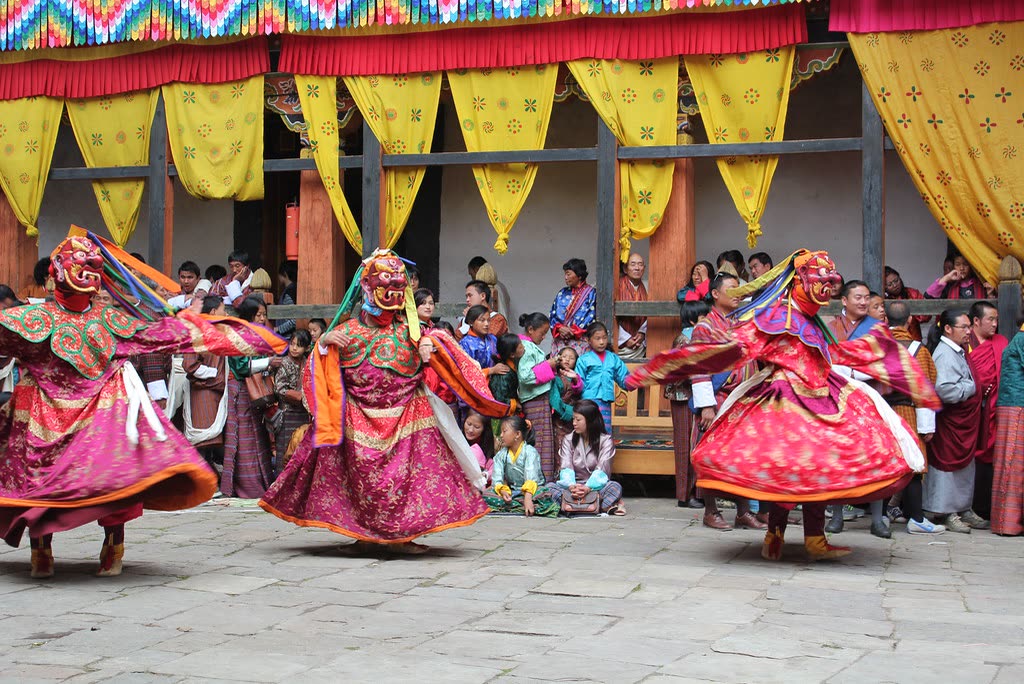
At festivals and family celebrations, people bring food in woven bamboo containers called bangchung, and share rice, meat dishes, cheese and fruit on the grass between the dances. Special occasions bring out dishes that take longer to prepare, such as dried beef or pork with chillies, and plenty of ara and butter tea.
During Losar, the Bhutanese New Year in late winter, families visit each other, play archery and darts, and eat for days. In Haa, the Lomba new year is celebrated with hoentay made by every household.
The seasons in a Bhutanese kitchen
Spring brings fern tips, nettle and the first greens. The monsoon summer is the season for mushrooms, including the prized matsutake, which is celebrated with a festival in the Ura valley. Autumn is harvest time: rice is cut in the valleys, apples and oranges ripen, and chillies are laid out on roofs to dry for the winter. In winter, dried chillies, dried meat and stored vegetables carry families through until spring.
Allergies and special diets
Wheat appears in momos, noodles and some breads, but rice-based meals make a gluten-free diet manageable with care. Nut allergies are less of a concern, as nuts are not widely used in Bhutanese cooking, but cooks should always be told. Please list any allergies or dietary needs when you book; we pass them to every hotel and restaurant on your route, and your guide checks dishes with the kitchen as you travel.
Eating as a vegetarian or vegan
Bhutan is one of the easiest countries in Asia for vegetarians. Many everyday dishes are made with vegetables, cheese, mushrooms or fern tips, and as a Buddhist country many Bhutanese avoid killing animals; much of the meat eaten is brought in from outside the country, and during auspicious months of the Buddhist calendar the sale of meat is restricted.
Vegans need a little more care, because datshi and butter appear in many dishes, but cooks are used to the request. Tell us when you book, and your guide will make sure every hotel and farmhouse knows in advance.
Spice levels and ordering
Hotels and restaurants that cater to visitors usually serve a buffet with dishes cooked mildly, alongside Indian, Chinese and continental options. It is a gentle introduction, but it is not how Bhutanese families eat. If you would like to taste food as it is cooked at home, ask your guide to arrange a lunch at a local restaurant or a meal with a farming family, and say how much heat you can take. 'A little' and 'Bhutanese' mean very different things.
Table manners and customs
- Food is traditionally eaten with the right hand, though cutlery is always offered to visitors.
- When offered food or drink, it is polite to decline once or twice before accepting; your host will expect to insist.
- Leave a little food on your plate at a home meal to show that you have been well fed.
- Before drinking ara, Bhutanese people often dip a finger in the cup and flick a few drops into the air as an offering.
A farmhouse meal
The best Bhutanese food we know is cooked in farmhouse kitchens: ema datshi made with that morning's cheese, red rice from the field outside, and butter tea poured beside the wood-fired stove. A farmhouse dinner, often with a traditional hot-stone bath, can be added to almost any of our journeys, and it is the moment many travellers remember most.
Frequently asked questions
Is Bhutanese food very spicy?
Traditional Bhutanese food is among the spiciest in the world, because chillies are eaten as a vegetable. Hotels catering to visitors cook much more mildly, and you can always ask for less chilli.
What is the national dish of Bhutan?
Ema datshi, a dish of chillies cooked in a sauce of datshi, a soft local cheese, is the national dish of Bhutan.
Can vegetarians travel easily in Bhutan?
Yes. Many everyday Bhutanese dishes are vegetarian, and cooks are used to the request. Vegans should mention it in advance, because cheese and butter are common.
Is it safe to drink tap water in Bhutan?
Visitors should drink bottled, boiled or filtered water. Hotels provide drinking water, and your guide will always have some in the vehicle.

Written by
The Bhutan Travel Nexus team, Bhutan-based travel designers who plan private journeys across the kingdom. Facts were checked in ; fees and rules can change, so we confirm them when you book.